
PACKAGING FORMATS
Stick Pack Packaging.
Understand stick pack seals, dimensions and rollstock requirements before choosing a machine or ordering film.

Illustrative pack format · not a production drawing
01 / UNDERSTAND THE FORMAT
What Is a Stick Pack?
A stick pack is a narrow, elongated flexible pack, usually used for a single serving. A typical rollstock stick pack has one longitudinal back seal and two transverse end seals.
Longitudinal back seal
The film edges join along the length of the pack. The back seam may be centered or offset; confirm its position on the sample or pack drawing.
Top and bottom end seals
Transverse seals close both ends of the tube. Choose the finished edge and opening point separately from this basic seal layout.
CUTTING & OPENING OPTIONS
Choose the Edge & Opening for Your Stick Pack
Use these reference details to describe your preferred pack. Edge shape and opening features can be combined—for example, a zigzag cut with a tear notch.
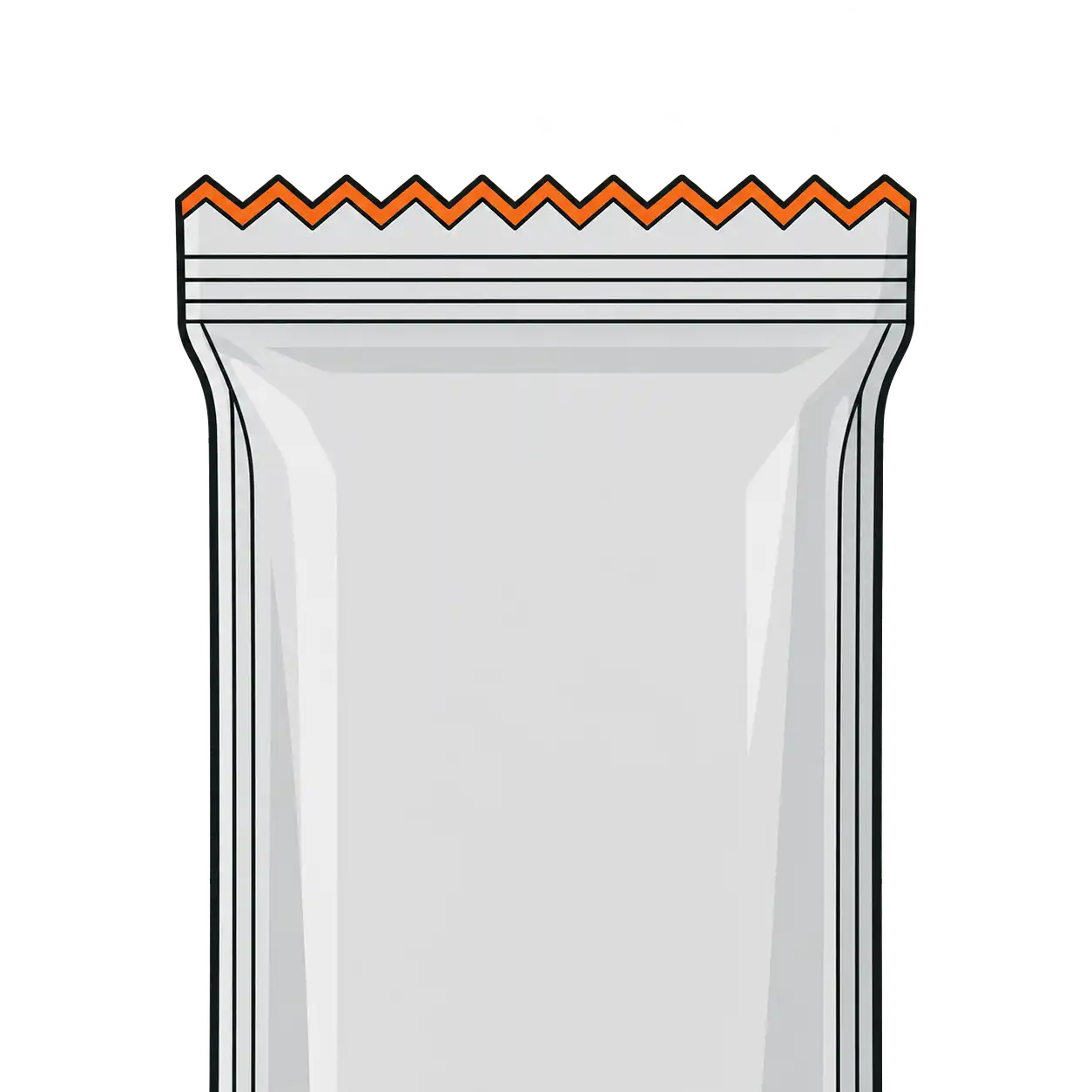
Zigzag Cut
A serrated edge across the end of the pack. Confirm how the actual film tears.
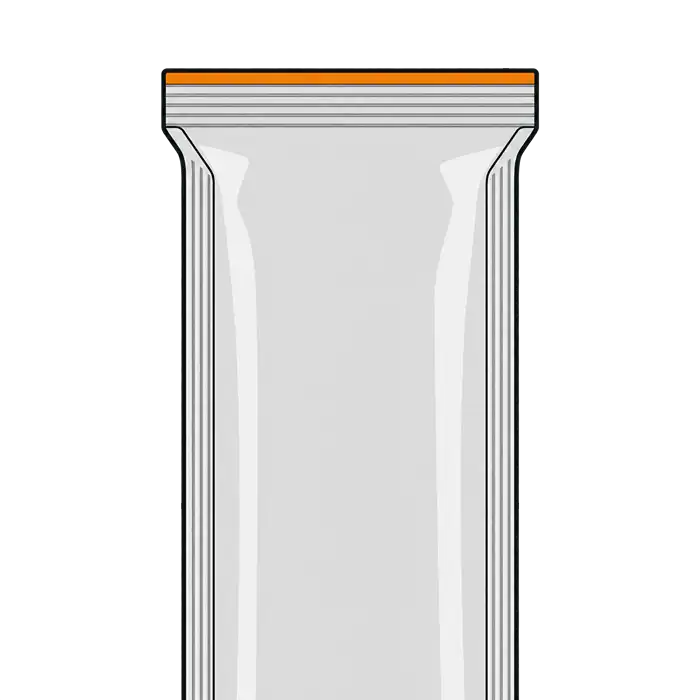
Straight Cut
A straight, level cut across the pack end. Specify the opening point separately.
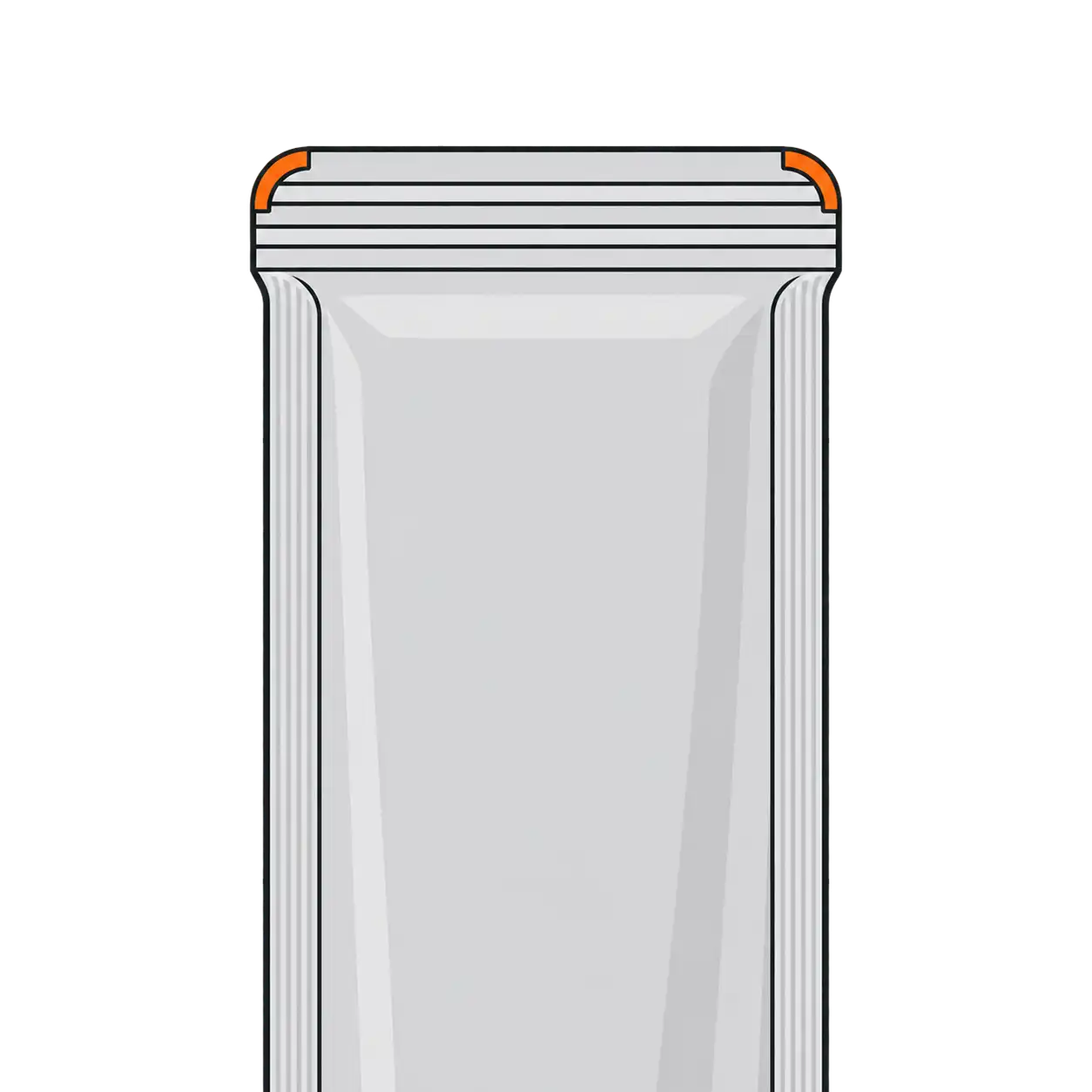
Rounded-Corner Cut
Rounded outer corners define the end profile. They can be combined with a tear notch.
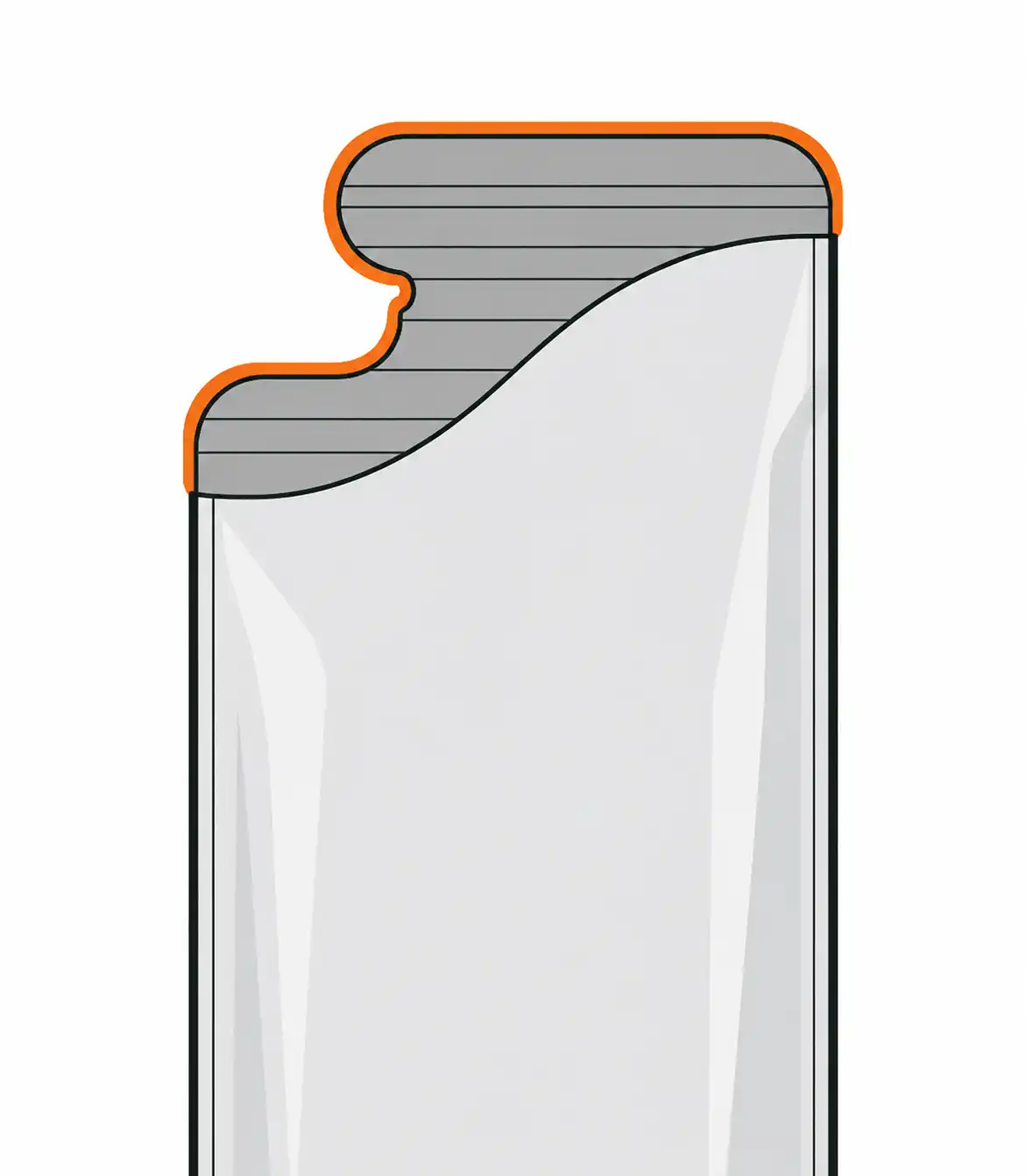
Die-Cut Shape
A defined contour creates a shaped end. Confirm the outline, seal area and matched tooling.
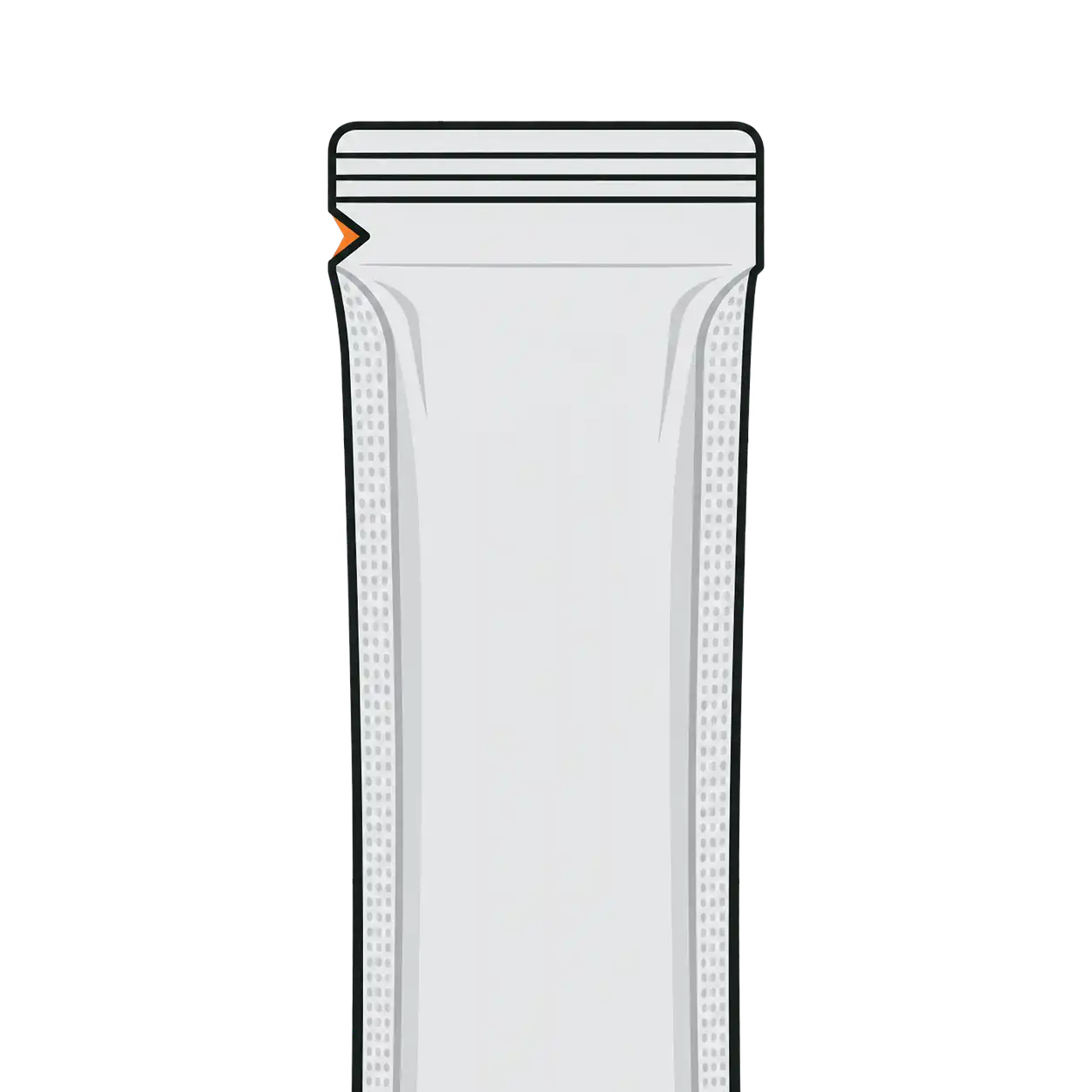
Tear Notch
A small notch provides a starting point for tearing. Confirm its position and the tear direction.
Check the opening with a filled sample. Confirm where the user should tear, how the film tears and whether the opening suits pouring or squeezing. Final details depend on the film, pack dimensions and confirmed machine tooling.
Compare the typical shape and seal layout—not just the name on a sample.
Stick pack
A slim, tubular pack, commonly for a single serving, with a back seal and two end seals.
Flat sachet
Usually a flatter pack with three or four sealed edges. A three-side-seal sachet can have one folded edge.
Pillow bag
Typically a wider, pillow-shaped pack when filled. It can share the same back-seal and end-seal principle.
Explore pillow bagsNames can overlap between suppliers. Confirm the actual sample, seal layout and intended use; a fixed width or length-to-width ratio does not reliably identify the format.
02 / SIZE YOUR STICK PACK
Choosing Your Stick Pack Size
Compare illustrative sizes and powder fill ranges. Finished dimensions are width × overall cut-to-cut length, including both end seals.
Slim format
23 × 110 mm
1–6 g
For sugar stick packs or instant coffee stick packs, start with the serving weight and check the required fill space.
Example single-lane film width 56 mm
Wider format
35 × 105 mm
6–12 g
For electrolyte powder stick packs or vitamin powders, review the complete blend and target serving—not just the active ingredients.
Example single-lane film width 80 mm
Longer format
35 × 140 mm
Product-dependent
For collagen powder stick packs or blended drink powders, review a longer format when the confirmed fill needs more space.
Example single-lane film width 80 mm
Illustrative sizes, powder fill ranges and product ideas only—not confirmed product-to-size matches. Actual capacity depends on bulk density and usable fill space. Confirm the pack and film specifications for your product and machine.
How does finished pack width relate to film width?
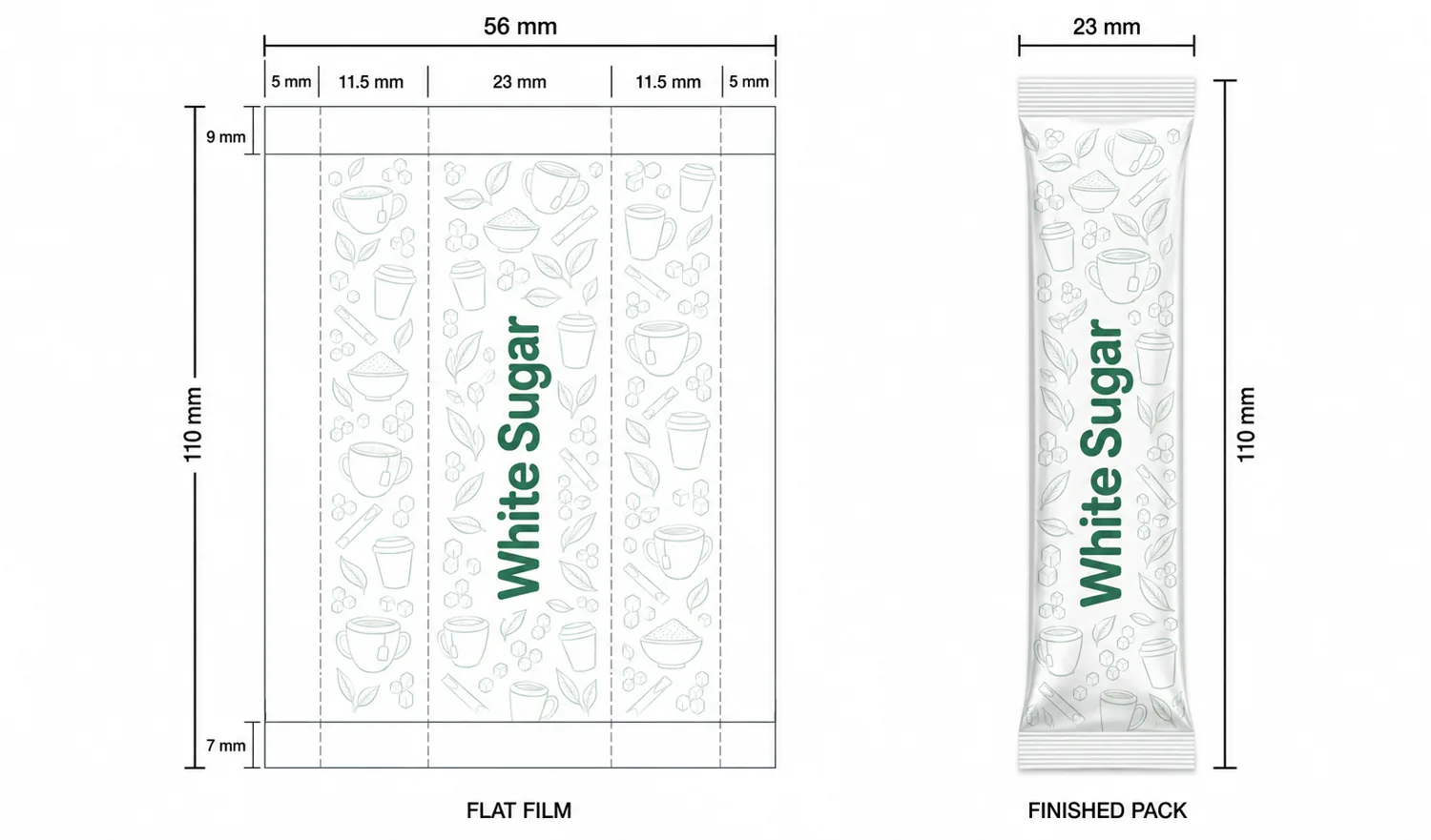
One strip wraps into one stick
The example shows 56 mm film forming a 23 mm-wide finished pack. The extra film wraps around the pack and provides the back-seal allowance.
This is the strip width for one lane. Total multi-lane web width also depends on lane layout, slitting and any specified trim allowance. Use the confirmed machine film drawing before ordering.
Have a reference pack?
Share its width × length, front-and-back photos, product and fill amount. Tell us whether it is filled or empty.
No bag size yet?
Send your product and target grams or mL per stick. A sample and any available density information help us review the size.