WEIGHING-BASED DOSING
MULTIHEAD WEIGHERS
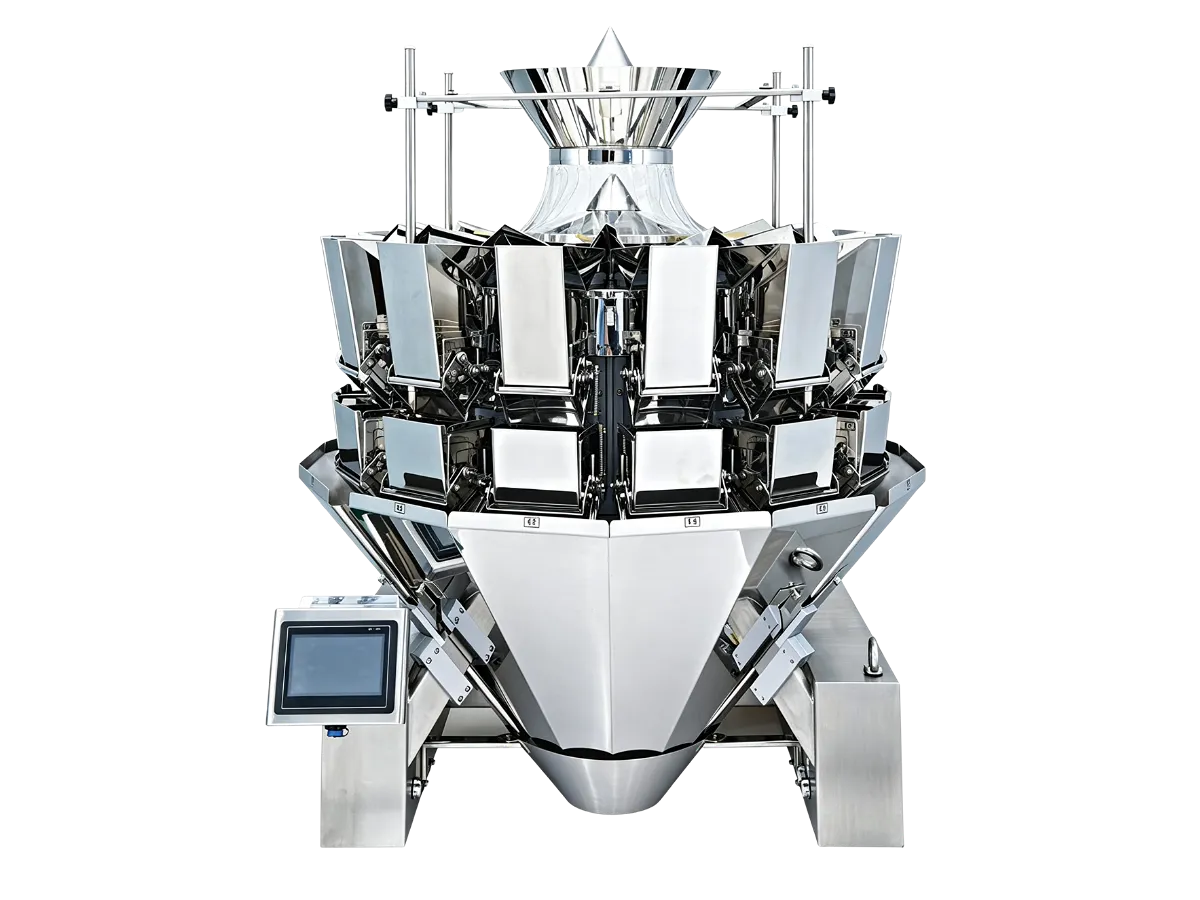
Multihead Weighers for Weight-Based Portioning
A multihead weigher is a combination-weighing system that creates a target pack weight by selecting a suitable combination of individually weighed portions.
WHAT IS A MULTIHEAD WEIGHER?
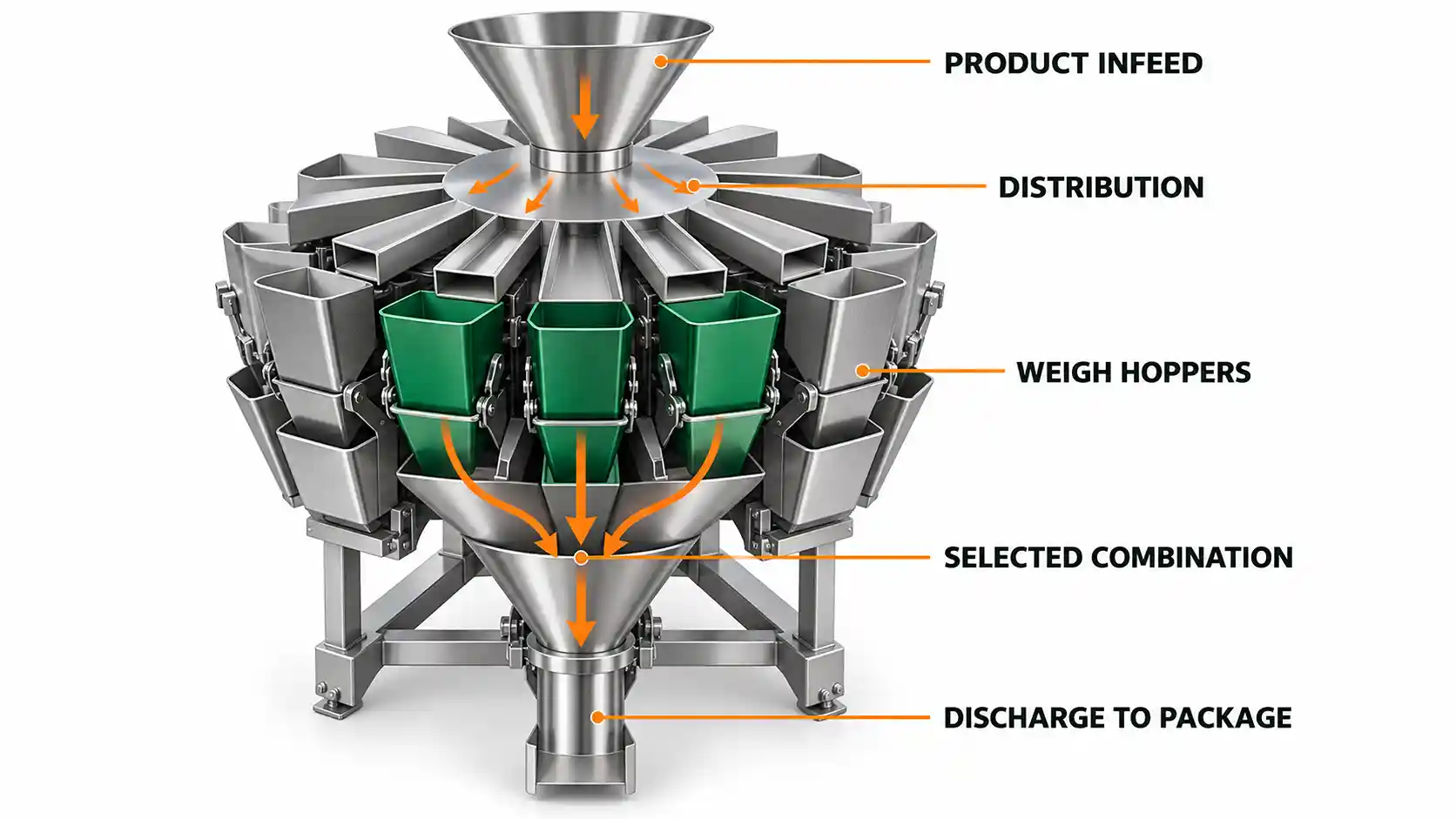
A weighing system built around selected hopper combinations.
Product is distributed to several weigh hoppers. The control system compares the available hopper weights, selects a suitable combination for the target pack weight, then releases that combination to the packaging machine.
WHY PRODUCTS ARE CONSIDERED FOR COMBINATION WEIGHING
What makes a product suitable for combination weighing?
Multihead weighing is considered when a product is packed to a target weight and can be supplied as multiple portions for combination selection. The product itself determines the appropriate feeding, contact surfaces, hopper arrangement and discharge route.
COMMON STARTING POINT
Dry & discrete products
Typical products: potato chips, nuts, confectionery, coffee beans and biscuits.
Confirm: piece size, product flow and target pack weight.
PRODUCT-SPECIFIC REVIEW
Fresh, frozen & delicate products
Typical products: fresh produce, frozen foods and fragile products.
Confirm: product condition, infeed route and transfer handling.
WEIGHT, NOT COUNT
Non-food pieces
Typical products: hardware and small components packed by target weight.
Confirm: whether the pack is defined by weight or an exact count.
MATERIAL CHARACTERISTICS TO CONFIRM
What changes the multihead-weigher configuration?
- Shape & piece sizeIncluding variation between pieces.
- Flow & surface conditionFor example, dry, moist, sticky or prone to clumping.
- FragilityWhether product can tolerate its proposed transfer route.
- Target pack & packageThe target weight, allowed tolerance and receiving package.
HOW IT WORKS: A 150 G POTATO-CHIP PACK
Several small weighed portions make one 150 g pack.
For illustration, imagine that the weigh hoppers currently contain 43 g, 38 g, 36 g, 33 g and other available portions. The control system searches the available weights and identifies a combination:
43 g+38 g+36 g+33 g=150 g
Those four selected hoppers open together and discharge to the bag. Hoppers that were not selected remain available, refill as needed, and are considered again in the next calculation. This repeated selection process is the combination-weighing principle behind a multihead weigher.
The weights above are a working-principle example only, not a performance or accuracy specification.
MULTIHEAD WEIGHER ACCURACY
Why multihead-weigher accuracy is product-specific.
A multihead weigher does not ask one hopper to deliver the whole pack. It weighs multiple available portions, then uses the combination closest to the target. This gives the control system more possible routes to the required pack weight than a single-portion approach.
However, a universal accuracy figure would be misleading. Potato-chip size, broken pieces, product flow, target pack weight, feeding consistency and the way the portion enters the bag can all affect the result. Accuracy should therefore be discussed against the actual product and agreed pack requirement.
VOLUME-BASED DOSING
VOLUMETRIC CUP FILLERS
Volumetric Cup Fillers for Fixed-Volume Dosing
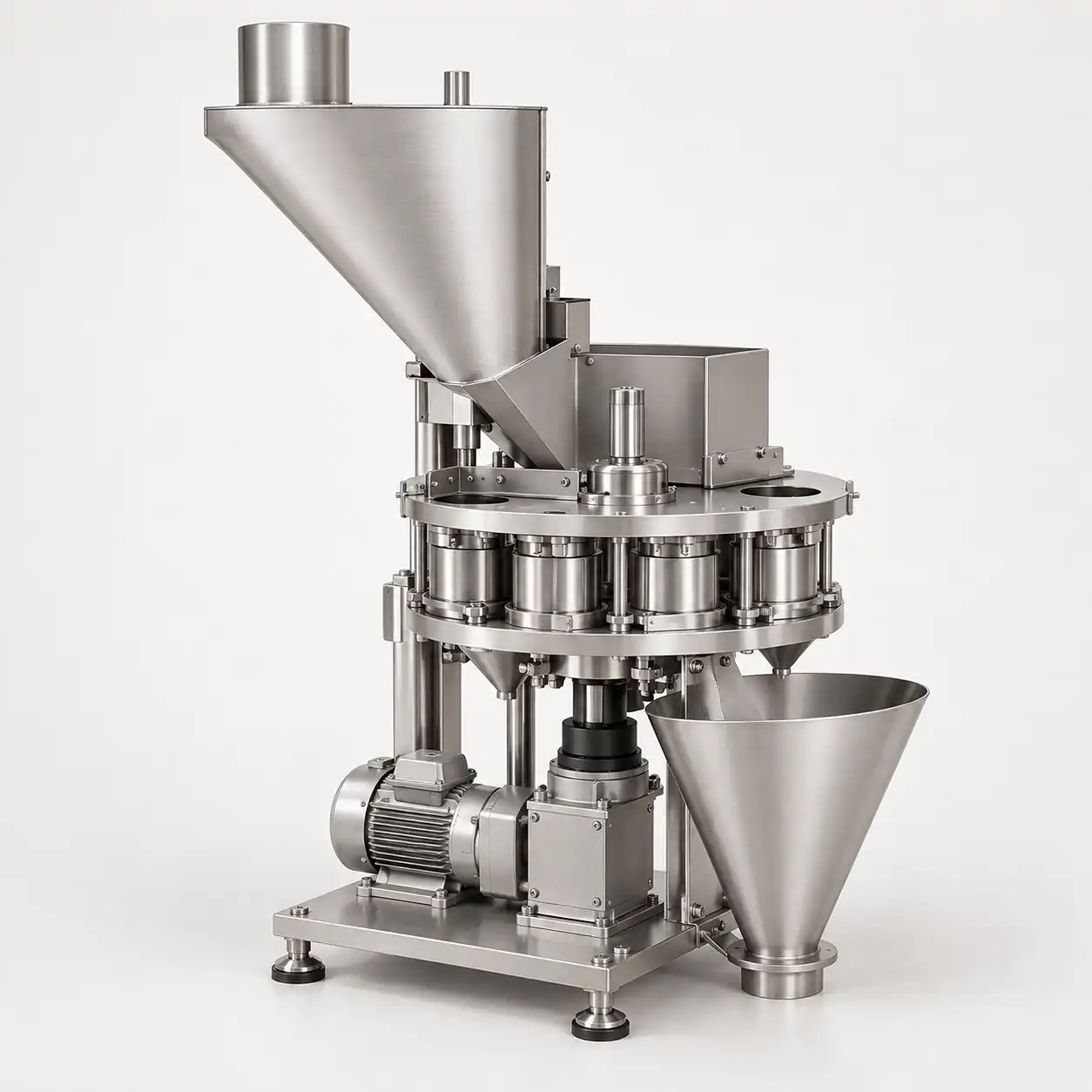
A volumetric cup filler machine portions product by filling a cup or chamber with a defined volume, then discharging that measured volume to the next packaging step.
WHAT IS A VOLUMETRIC CUP FILLER?
A repeatable cup volume is the starting point for each portion.
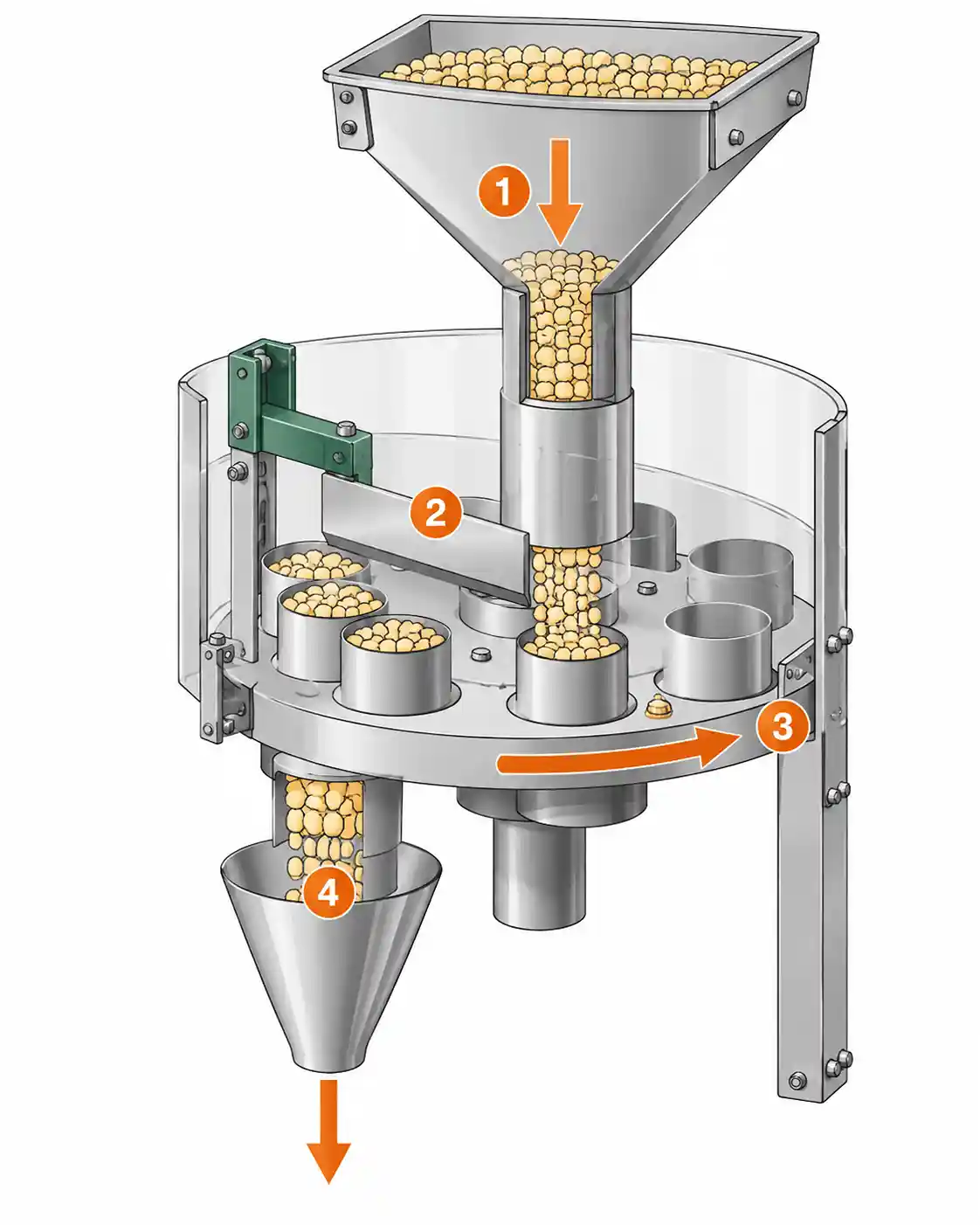
Product moves from the hopper into measuring cups or chambers. Once a cup is filled to its defined volume, the rotary assembly carries it to the discharge position, where the portion is released to the package or the next transfer point.
It is a volume-based method, not a direct weighing method. The product's bulk density and flow behaviour therefore matter when discussing the resulting portion.
WHEN TO CONSIDER VOLUMETRIC CUP DOSING
For dry products that can fill a defined cup consistently.
It is often considered when a repeatable volume is the appropriate starting point for the packaging process.
Best starting point: dry products that can fill a defined cup consistently. Where target pack weight or weight tolerance is the deciding requirement, compare a weighing method before selecting a volumetric route.
COMMON APPLICATIONS
- Rice & beans
- Small, dry seeds
- Sugar & salt
WHAT TO CONFIRM
- Product flowHow consistently the product fills the measuring cups.
- Bulk densityWhether the product volume and product weight remain sufficiently stable for the project.
- Required doseThe required cup volume and package presentation.
- Product variationChanges in particle size, shape or product condition.
VOLUMETRIC CUP FILLER WORKING PRINCIPLE
How fixed-volume dosing moves to the package.
- 01Product enters the hopper and reaches the cup-filling area.
- 02Measuring cups are filled to their defined volume.
- 03The rotary assembly moves the filled cup to the discharge position.
- 04The measured volume is released through the outlet to the package.
SCREW-BASED DOSING
AUGER FILLERS
Auger Fillers for Powder Dosing
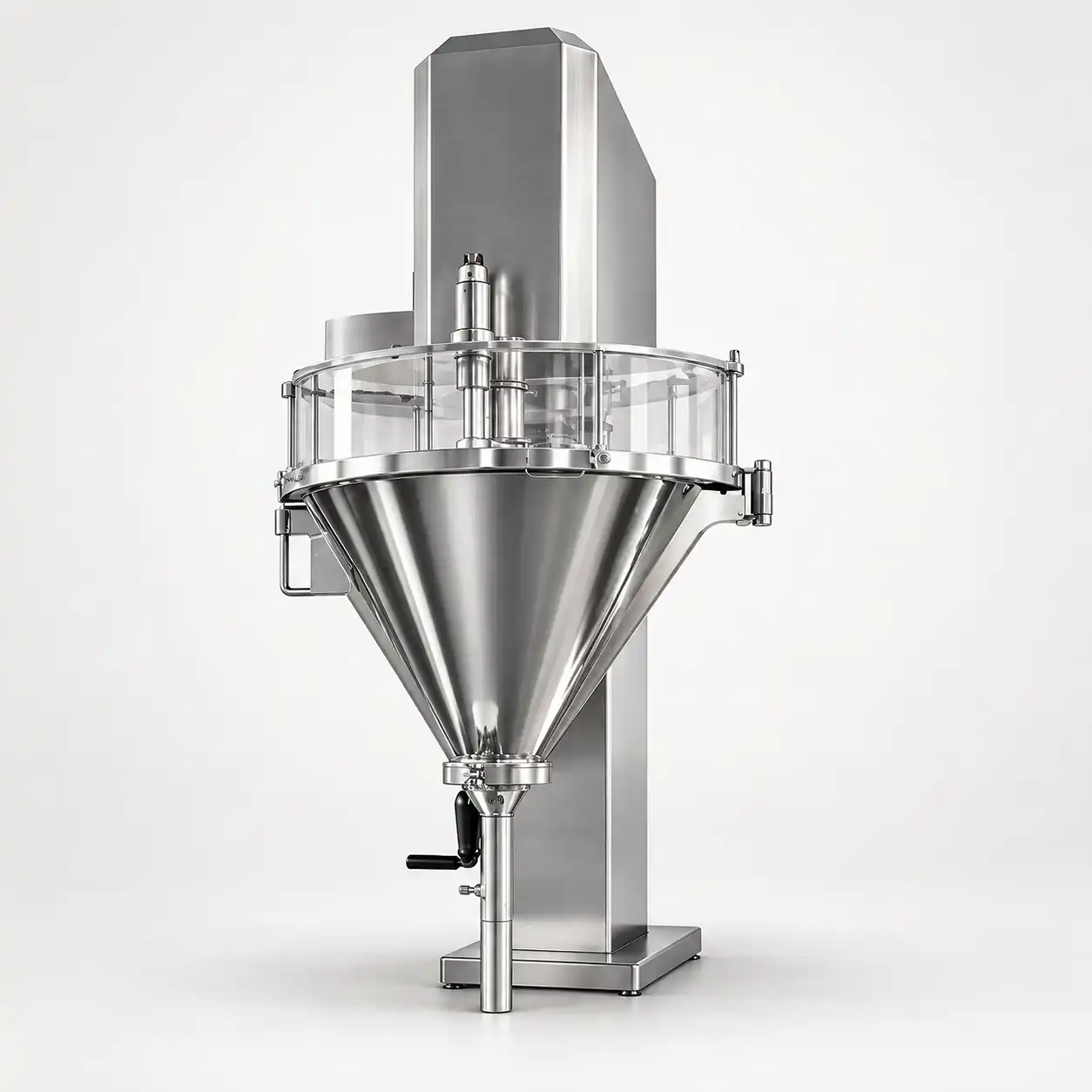
An auger filler machine portions powder by turning an internal screw that moves product from a hopper through a dosing tube and into the next packaging step.
WHAT IS AN AUGER FILLER?
A rotating screw creates the controlled powder feed.
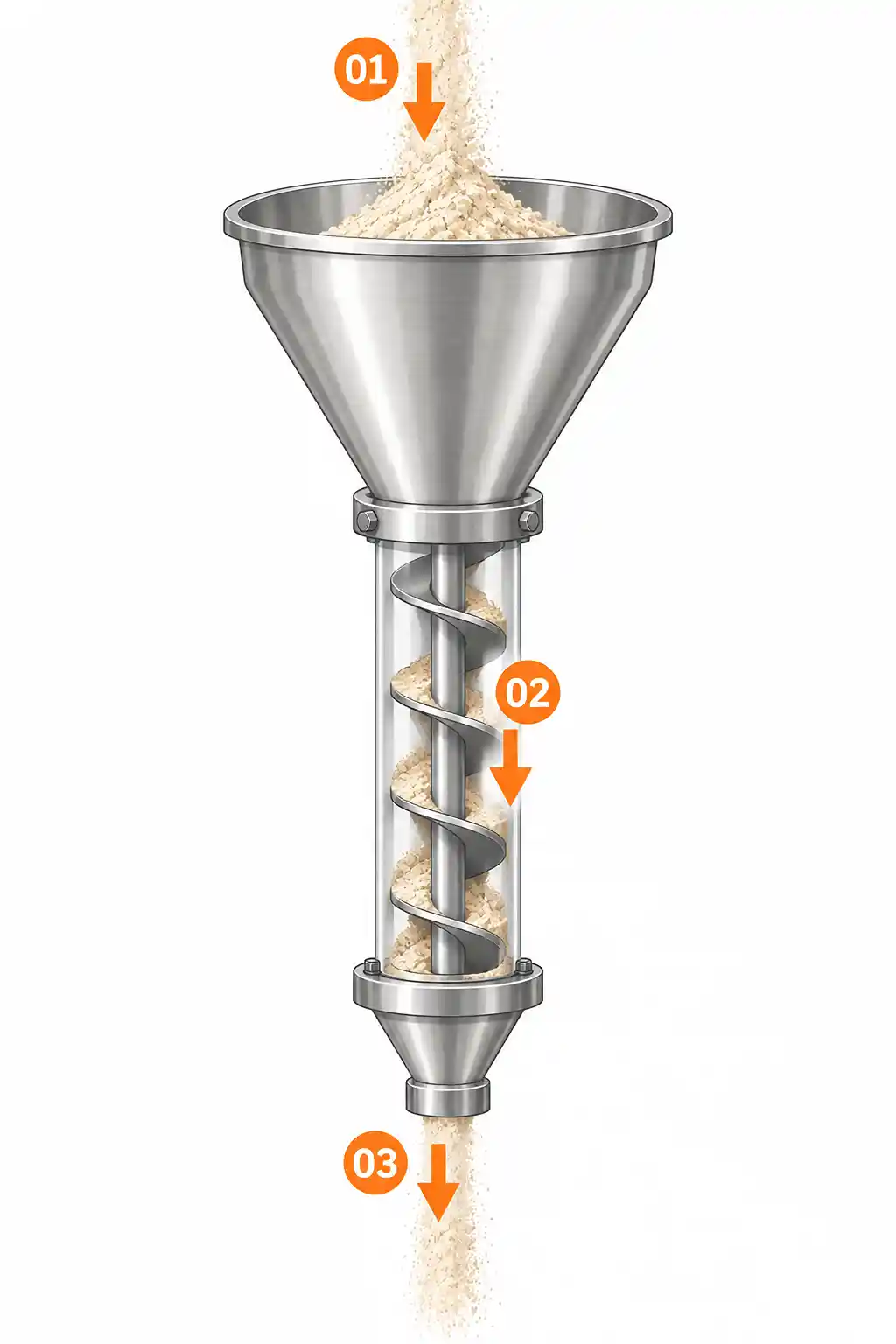
Powder enters the hopper and reaches the auger. As the screw rotates, it carries product through the dosing tube and toward the outlet. The filled product then transfers to the package or to the next point in the line.
This is a screw-based dosing method. The auger, powder behaviour and requested pack result are considered together when reviewing an auger filling machine for powder.
WHEN TO CONSIDER AUGER DOSING
For powder products that need a controlled screw-based feed path.
Auger filling is commonly evaluated for powder and powder-based products where the product needs to move from a hopper through a defined dosing route before it enters the package.
Best starting point: a powder product and its package requirement should be reviewed together. The appropriate auger arrangement depends on how the powder behaves in the hopper, through the screw and at discharge.
WHAT TO CONFIRM
- Powder flowWhether the product feeds consistently from the hopper toward the auger.
- Powder conditionWhether the material tends to settle, bridge, clump or create dust during handling.
- Required doseThe required filled amount and the pack requirement for the project.
- Package transferHow the powder moves from the outlet into the receiving package.
APPLICATIONS TO REVIEW
- Single powder productsA powder dosed to a defined pack requirement.
- Powder blendsReview how the blended product behaves during feeding and screw transfer.
- Fine powder projectsReview powder condition and the intended package interface together.
AUGER FILLER WORKING PRINCIPLE
How powder moves through an auger filling machine.
- 01Powder enters the hopper and reaches the auger area.
- 02The auger turns and carries powder through the dosing tube.
- 03The powder discharges through the outlet to the receiving package.
LIQUID HANDLING & DOSING
LIQUID FILLING SYSTEMS
Liquid Filling Systems Start with How the Product Behaves.
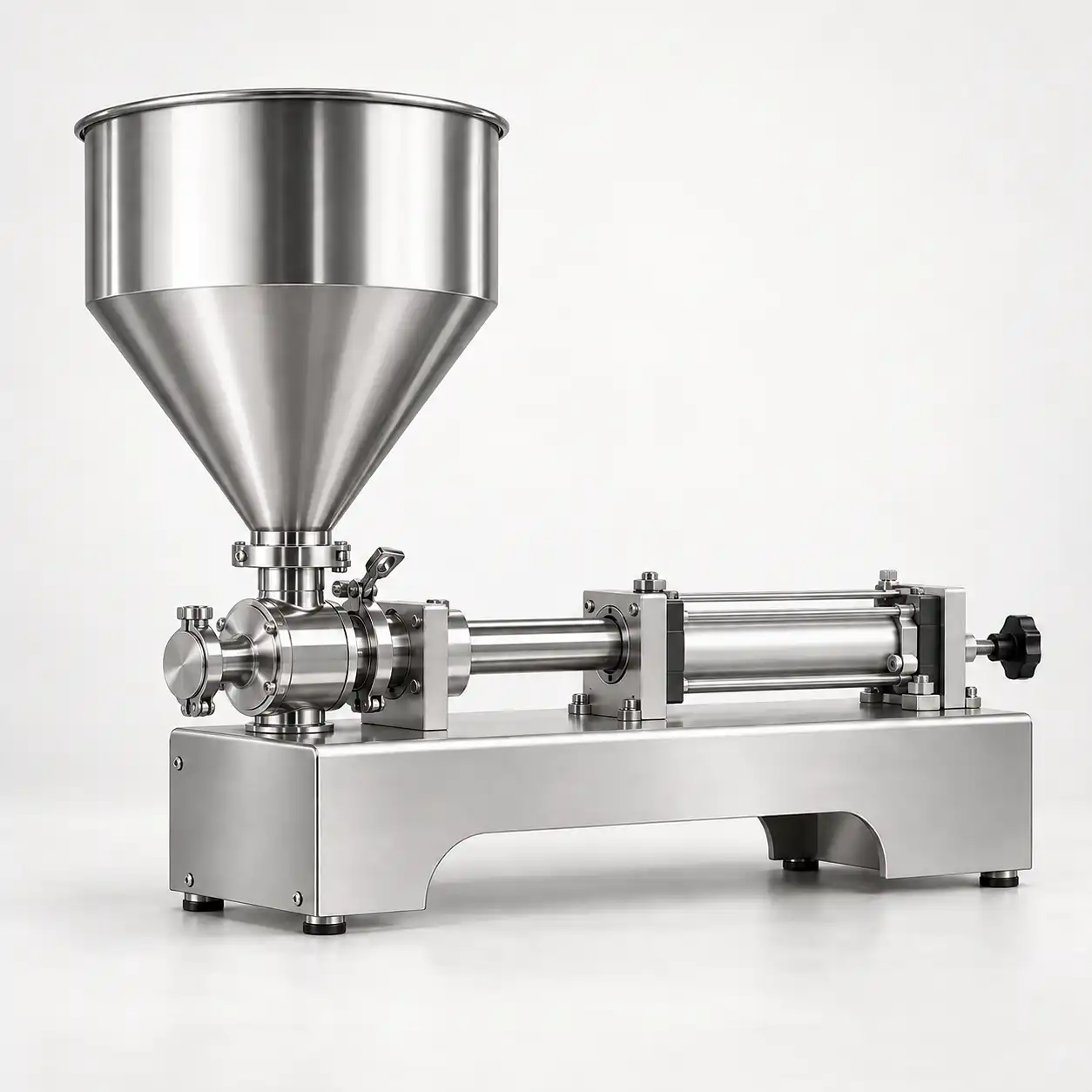
A liquid filling system may include a supply pump, a metering method and a filling nozzle. The appropriate route depends on the liquid and the required pack result—not on the product name alone.
START WITH THE PROCESS
A transfer pump and a filling method do different jobs.
A pump can move product from a tank or hopper to the filling point. The final portion may then be controlled by a separate metering arrangement, filling valve or nozzle. Reviewing these as one system avoids choosing a pump type from viscosity alone.
PUMP AND DOSING ROUTES TO REVIEW
Different liquid characteristics lead to different discussions.
These are practical starting points, not final equipment recommendations. The actual product and line requirement should be reviewed before a configuration is confirmed.
Low-viscosity liquid transfer
For free-flowing liquids, the supply side may use gravity feed or a centrifugal transfer route. Confirm stable product supply, liquid temperature and the required fill control.
Examples to discuss: water-like liquids, thin beverages, light sauces.Air-operated diaphragm pumps
Air-operated double diaphragm pumps are often evaluated for chemical, corrosive or abrasive liquids where wet-end material compatibility is central to the discussion.
Confirm: chemistry, temperature, abrasiveness and compatible wetted materials.Rotary lobe pumps
Rotary lobe pumps are a route to assess when gentle, low-pulsation product handling is important, including for viscous or sensitive process fluids.
Confirm: viscosity, shear sensitivity, particles and hygienic cleaning needs.Ceramic metering pumps
Ceramic piston or rotary-valve metering pumps are typically discussed for controlled, repeatable liquid dosing where wear resistance and liquid-contact compatibility matter.
Confirm: required dose, liquid condition, particle content and cleaning process.WHAT CHANGES THE CONFIGURATION
Four checks shape the filling route.
- Viscosity & temperatureHow the liquid flows at its actual filling condition.
- Particles, foam & sensitivityWhether the product needs gentle handling or has inclusions to protect.
- Required pack resultThe target fill amount, package opening and final presentation.
- Wetted materials & cleaningCompatibility, hygiene and the intended cleaning process.
ORIENTATION & COUNTING
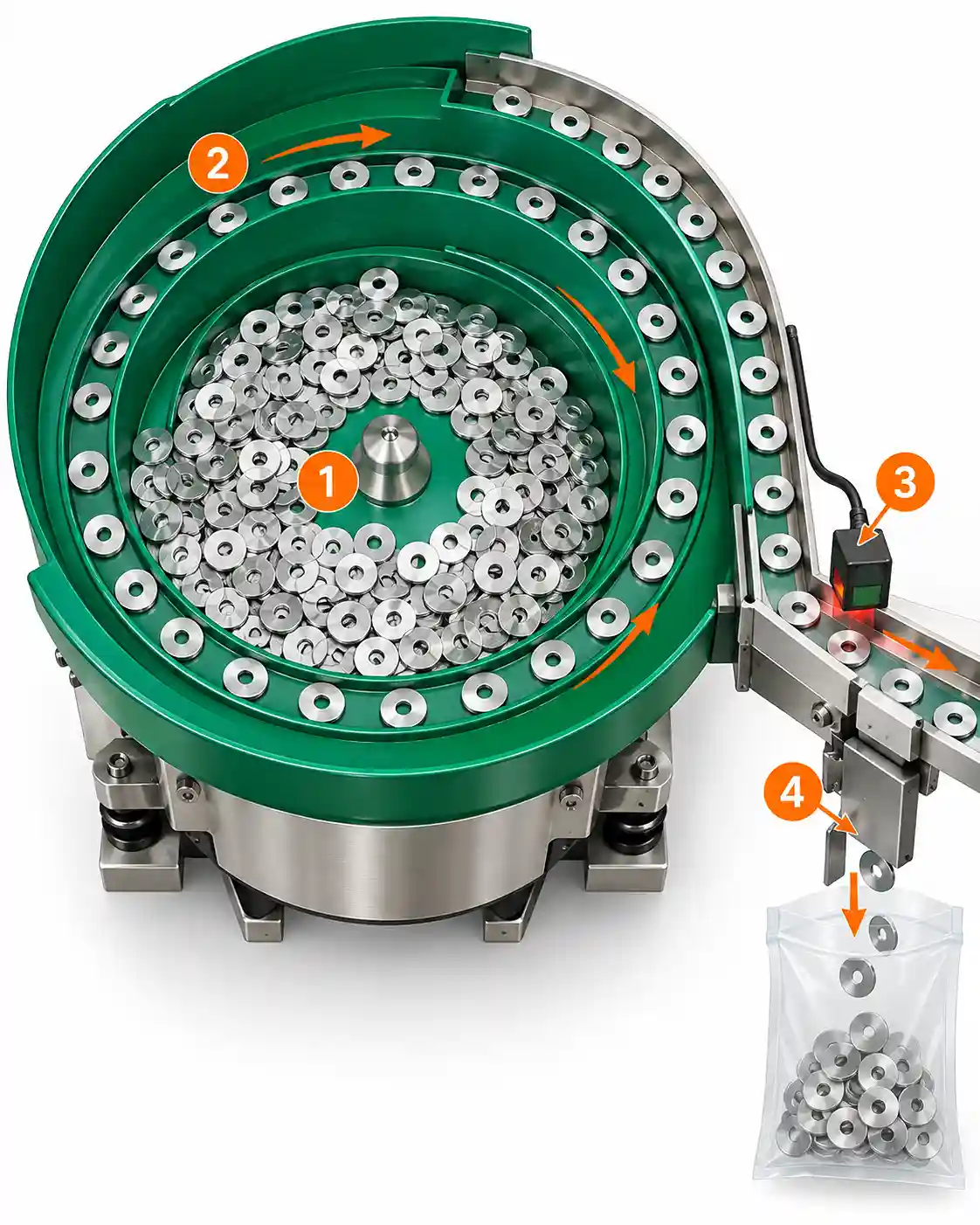
VIBRATORY BOWL FEEDERS & COUNTING SYSTEMS
Vibratory Bowl Feeders for Controlled Piece Counting.
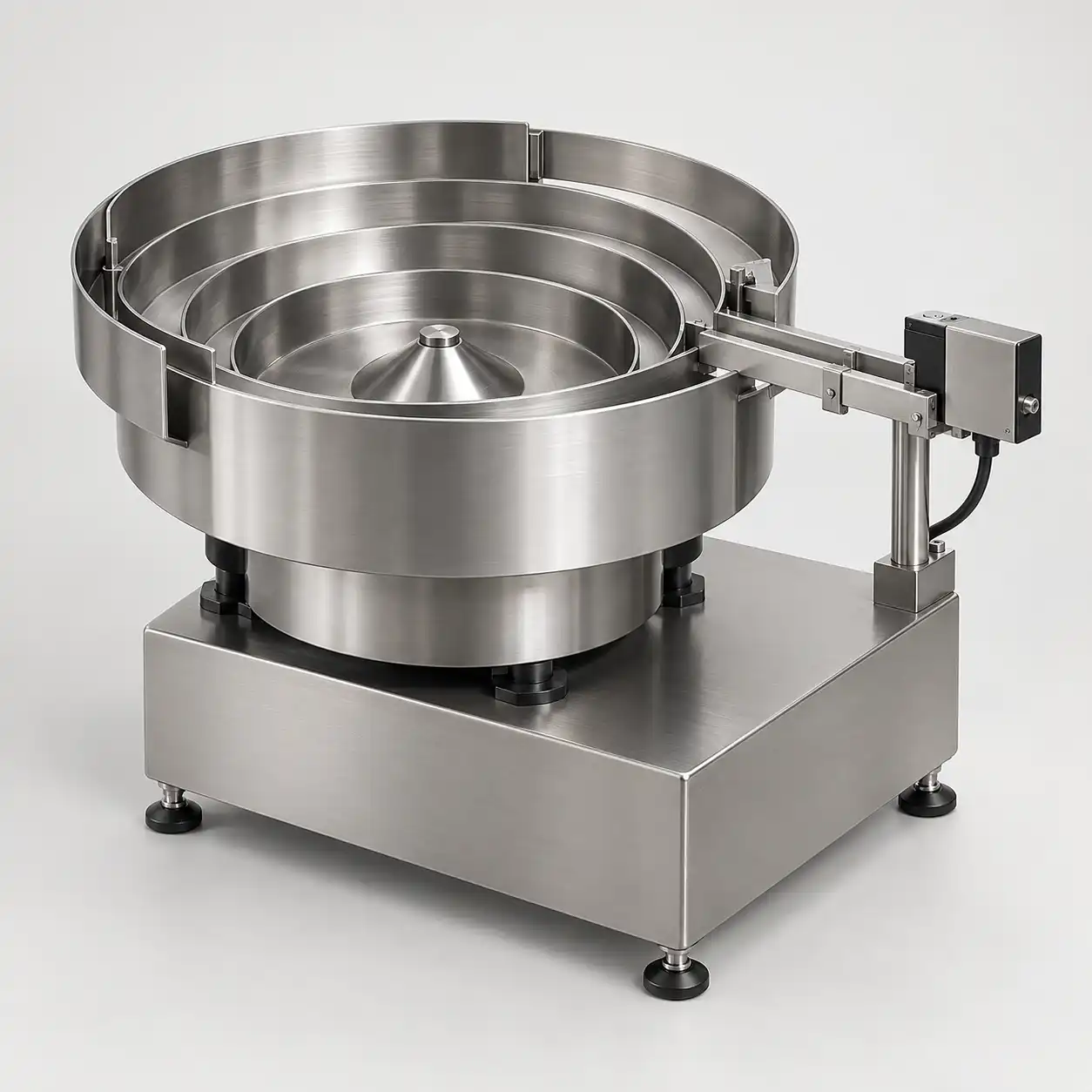
A bowl feeder turns a bulk supply of individual items into a separated, repeatable stream. A sensor and release arrangement can then count accepted pieces into the next packaging step.
WHAT A BOWL FEEDER DOES
It prepares the piece before the count happens.
Controlled vibration moves loose items along a purpose-designed bowl track. Features on the track can separate items, reject unsuitable orientations and present accepted pieces to a linear track, sensor or downstream machine.
A counting system then detects each accepted piece and releases the required quantity to the bag, box, bottle, kit or next process point.
WHEN TO CONSIDER PIECE COUNTING
For packs with a defined item count.
Review this route when individual items must arrive in a controlled stream before they enter the pack.
EXAMPLES TO DISCUSS
- Screws, nuts & washers
- Caps, closures & plugs
- Tablets or capsules
- Repeat moulded components
WHAT TO CONFIRM
- Part shape & orientationHow the item should arrive at the discharge point.
- Surface & conditionWhether pieces nest, tangle, stick, mark or damage during handling.
- Count & pack formatThe quantity per pack and how the pack receives the pieces.
- Downstream interfaceThe handover height, available space, controls and receiving equipment.
VIBRATORY BOWL FEEDER WORKING PRINCIPLE
Reliable counting starts with a controlled stream.
- 01Bulk supply enters the bowlItems are introduced from a hopper or manual supply into the feeding area.
- 02Pieces separate and orientTrack tooling keeps accepted pieces moving while unsuitable presentations return or recirculate.
- 03Accepted pieces are detectedA sensor records each correctly presented item at the defined count point.
- 04The set quantity is releasedA gate, buffer or downstream transfer releases the required number of pieces to the pack.