
PACKAGING SOLUTIONS BY PRODUCT
Tea & Coffee
Packaging Solutions
Coffee beans, ground coffee, loose-leaf tea and tea powder call for different approaches to dosing, feeding and sealing. Start with your product, target fill and preferred pack format to define a packaging route.
Machine configuration depends on the product sample, pack specification and required output.
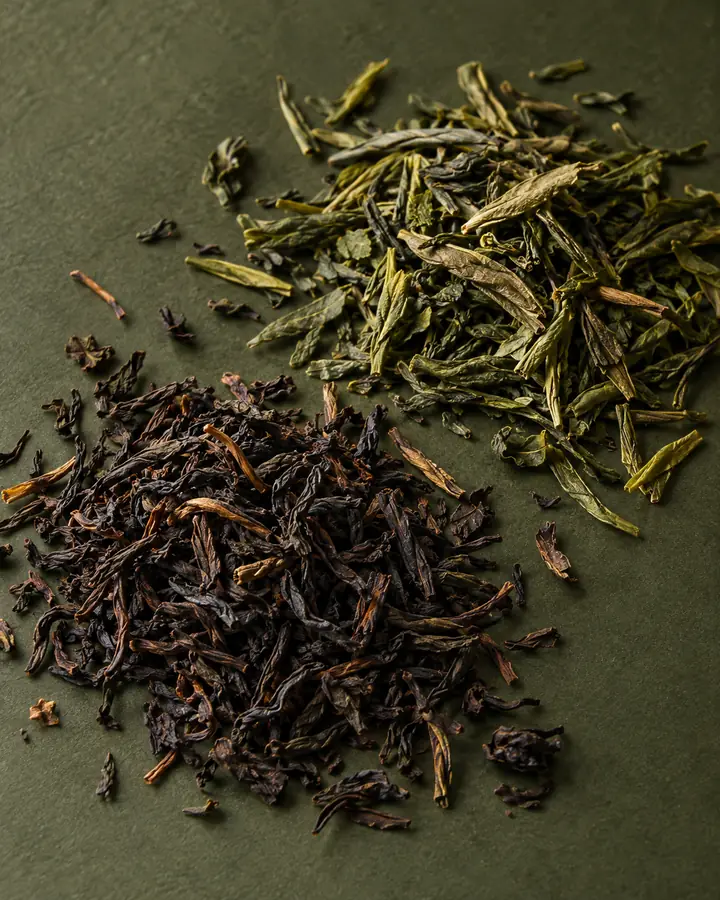
TEA PACKAGING SOLUTIONS
What kind of tea are you packing?
Choose your product form to see the recommended retail packs, the product properties that affect packaging and the matching equipment route. Final machine settings are established from the tea sample, target fill and finished pack.
THE PACKAGING QUESTION
How should loose-leaf tea be packed for retail?
Start with the leaf type, target fill and the way the finished pouch will be sold. Packaging material and seal design help manage exposure to moisture, light and oxygen during storage; the required protection depends on the tea and intended storage period.
RECOMMENDED RETAIL PACKS
See the pack before choosing the machine.
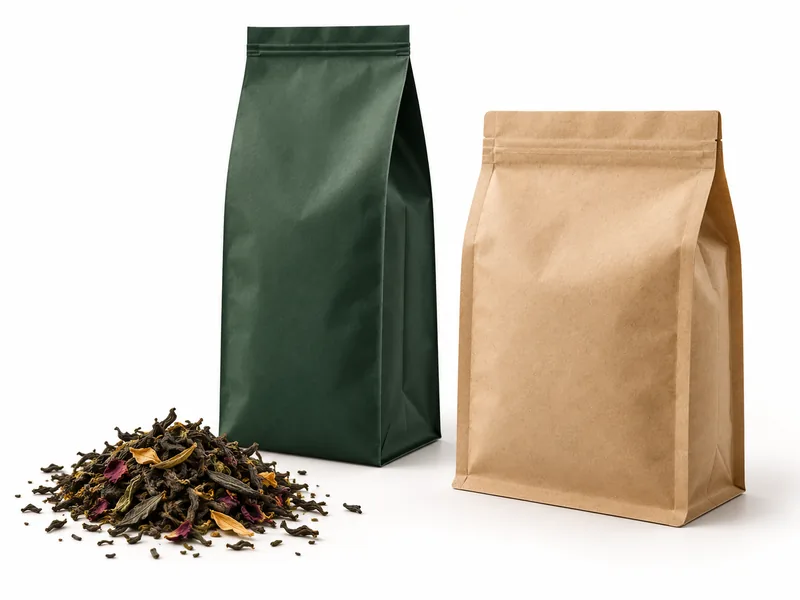
PRODUCT → PACKAGING DECISIONS
What matters for loose leaves?
- Leaf size and condition
- Loose leaves are bulky, irregular and fragile. Whole leaves occupy more volume and break under excessive handling, so the line needs gentle feeding, stable weighing and a clear drop path into the pouch.
- Quality during storage
- Moisture, oxygen, light and temperature change tea quality. The material barrier and first seal must support the intended storage conditions; shelf life is then validated for the specific tea.
- Pack weight and sealing
- Loose-leaf bulk sets the required pouch volume even at a modest net weight. A wide pouch opening and unobstructed product drop keep leaves away from the final seal.
- Label and variable print
- Decide where the product label, lot code and date will appear. Keep print and label areas clear of gussets, the pouch mouth and the final seal; availability of integration is project-specific.
EQUIPMENT ROUTE
Premade pouch packing
This route uses multihead weighing followed by premade-pouch feeding, opening, filling and sealing. Leaf size, target fill and pouch opening set the required configuration.
Explore Premade Pouch Packing MachinesTHE PACKAGING QUESTION
Is your tea powder ground leaf or soluble tea?
Matcha is finely ground tea leaf, while soluble or instant tea is a different product form. Particle size, flow, dust and moisture behaviour influence dosing, seal cleanliness and pack format. Soluble tea fits small sachet and stick-pack formats. Matcha and other ground teas use retail pouches or tins, with the dosing system selected from their powder properties.
RECOMMENDED RETAIL PACKS
Match the pack to the powder form.
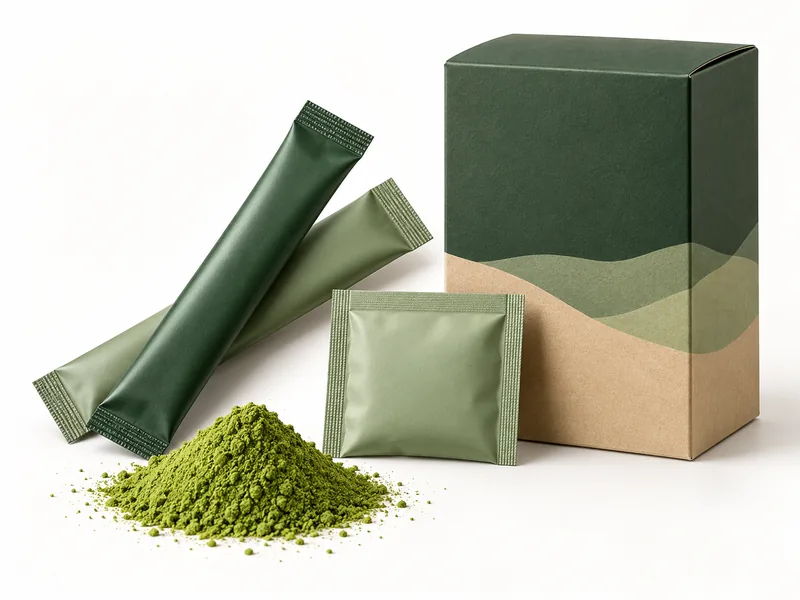
PRODUCT → PACKAGING DECISIONS
What matters for tea powder?
- Powder identity
- Matcha is a very fine ground-leaf powder; soluble tea is an extract powder or granule designed to dissolve. Their particle structure and flow are different, so they require different dosing settings.
- Moisture and appearance
- Soluble tea absorbs moisture and can cake, while matcha loses colour and quality under light, moisture and heat. Both need a strong moisture barrier, and matcha also benefits from light protection.
- Flow, dose and seal
- Fine tea powder generates dust and can remain on the seal area. Controlled dosing, dust management and enough headspace protect seal cleanliness and pack consistency.
- Label and variable print
- Reserve space for product information, lot and date on the primary or outer pack as required by the sales market. Check print placement and integration against the actual line layout.
EQUIPMENT ROUTE
Multi-lane back-seal sachets
For soluble tea, a multi-lane route combines dosing, film handling, sachet forming, filling, sealing and cutting. Product trials establish the final operating settings.
Explore Multi-Lane Packing MachinesU.S. RETAIL PACK & TRACEABILITY
Where will the label and code go?
For U.S. retail food packs, plan the display area for the food name and net quantity, plus space for other applicable label information. If your project uses a lot or date code, decide its position with the finished pouch artwork so it remains legible and clear of folds and seals. Coordinate the final artwork with coding and line integration. Requirements differ in other sales markets.
Sources & research basis
- Review of tea quality during storage
- Matcha water-activity and light study
- Instant-tea moisture study
- FDA Food Labeling Guide
Product, pack and equipment suitability remain subject to sample review.
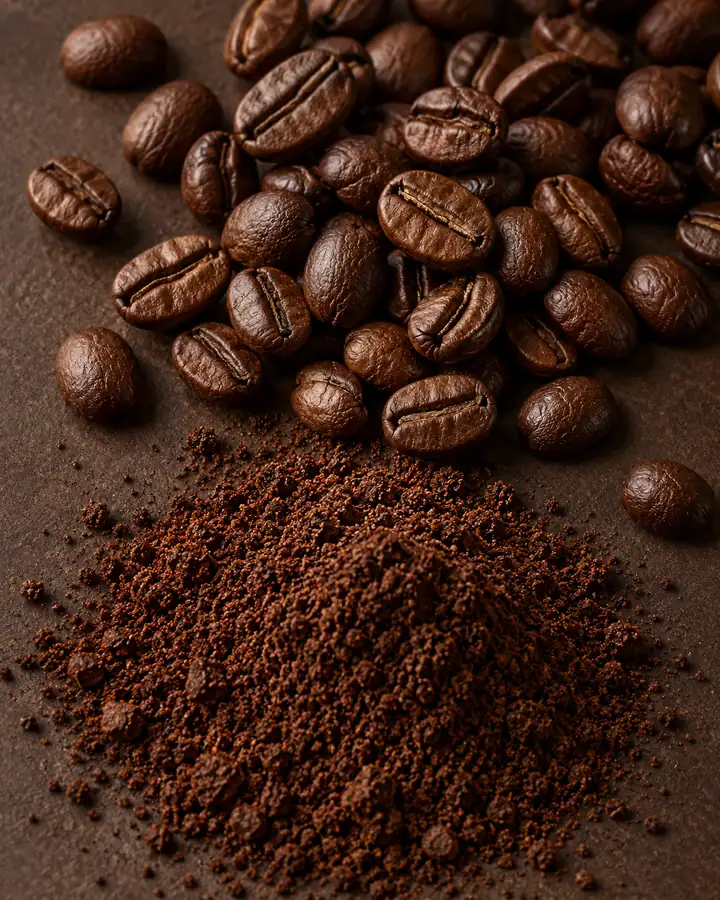
COFFEE PACKAGING SOLUTIONS
What kind of coffee are you packing?
Coffee packaging starts with the product form. Choose roasted beans, ground coffee, instant coffee or coffee mix / 3-in-1 to see the recommended retail pack, key storage factors and matching equipment route. Final machine settings are established from the product sample, finished pack and required output.
THE PACKAGING QUESTION
How should roasted coffee beans be packed for retail?
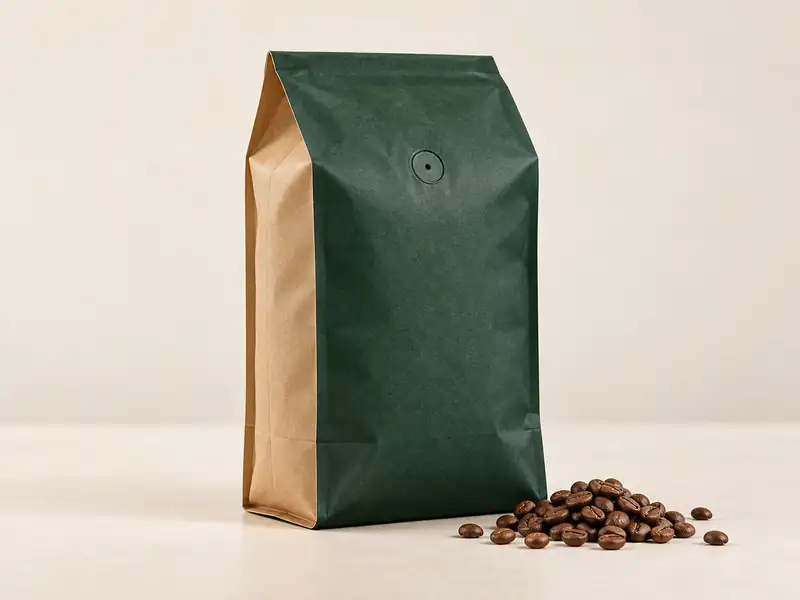
Roasted coffee beans are commonly sold in flexible retail bags. Target fill, bag structure, storage goal and gas release after roasting shape the packaging route. A one-way valve, protective atmosphere and barrier material are separate decisions within that route.
PRODUCT → PACKAGING DECISIONS
What matters for roasted beans?
- Freshness and gas release
- Roasted coffee beans release carbon dioxide after roasting. A one-way degassing valve lets this gas escape while limiting oxygen entry, preventing the sealed bag from swelling.
- Oxygen, moisture and light
- Oxygen drives coffee staling, while moisture and light accelerate quality loss. A high-barrier, well-sealed bag protects aroma throughout storage and distribution.
- Pack weight and bag geometry
- Target fill, pouch dimensions, gussets and pouch-mouth clearance affect the route from weighing to the final seal.
- Label and variable print
- Reserve a clear area for the product label, lot code and date. Check placement against folds, valves and the final seal.
EQUIPMENT ROUTE
VFFS quad-seal bag route
This route forms a quad-seal bag from rollstock, fills the beans and integrates the selected valve process. Bag dimensions, target fill and valve position define the setup.
THE PACKAGING QUESTION
How should ground coffee be packed?
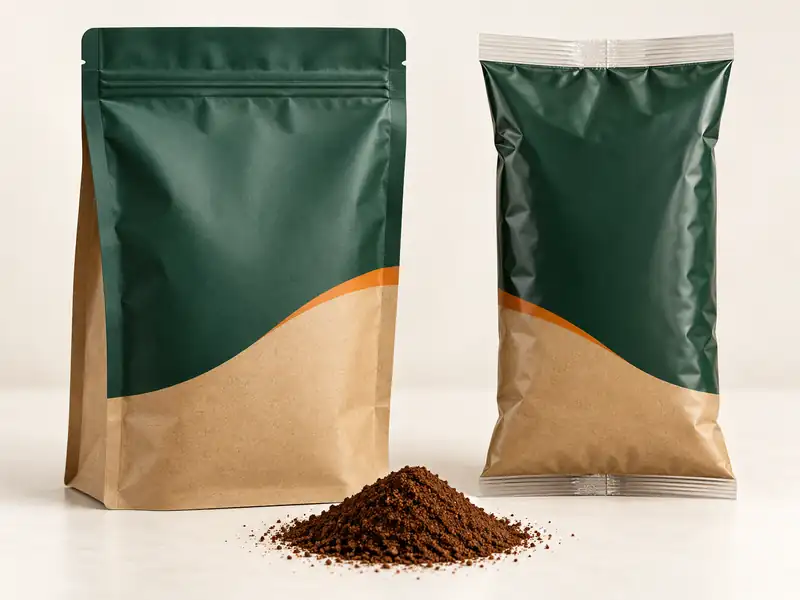
Ground coffee has a different handling and storage profile from whole beans. Grind, powder movement and target fill affect dosing, while the finished pack controls presentation, material choice and seal geometry.
PRODUCT → PACKAGING DECISIONS
What matters for ground coffee?
- Powder condition
- Ground coffee has a larger exposed surface area than whole beans, loses aroma faster and produces fine dust. Grind size and bulk density directly affect powder flow and dosing consistency.
- Seal-area cleanliness
- Fine coffee particles collect on the pouch mouth and weaken seal consistency. A controlled product drop, adequate headspace and dust extraction keep the sealing area clean.
- Storage protection
- Ground coffee oxidizes rapidly because of its high surface area. A strong oxygen and moisture barrier plus a consistent final seal preserves aroma.
- Single serve or retail pack
- One dose and a larger retail pack require different dimensions, artwork area and machine discussion.
EQUIPMENT ROUTE
Doypack or VFFS bag route
The finished bag determines whether the project uses a premade-pouch or VFFS route. Powder flow, target fill, film and seal-area cleanliness define the operating setup.
THE PACKAGING QUESTION
Is the product instant coffee granules or a coffee-based powder mix?
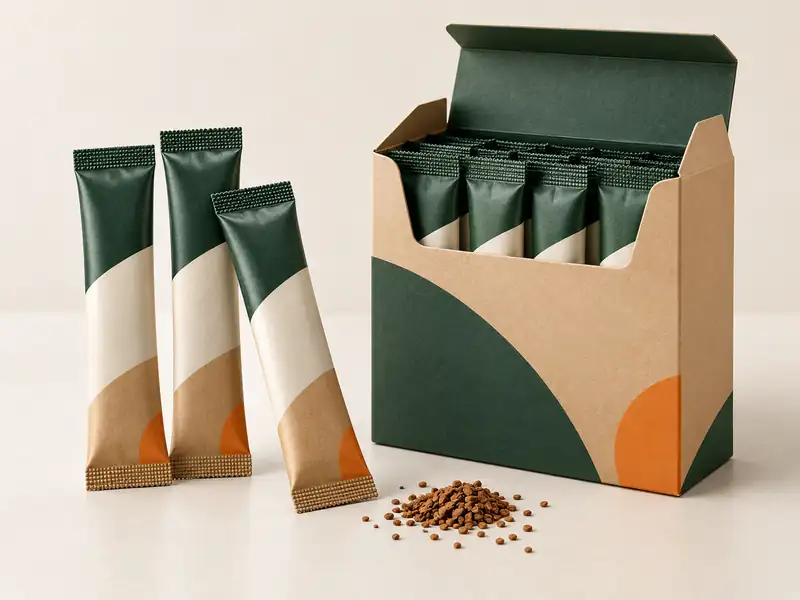
Instant coffee is distinct from ground coffee, while a coffee mix may contain sugar, creamer or flavourings. Product form, flow behaviour, dose and retail format determine whether the route uses a sachet, stick pack or larger bag.
PRODUCT → PACKAGING DECISIONS
What matters for instant coffee?
- Product identity
- Instant coffee granules are porous and free flowing compared with fine powder, while coffee mixes contain ingredients with different densities. Each form needs its own dosing and agitation settings.
- Flow and dose
- Instant coffee absorbs moisture and forms lumps when exposed to humid air. Enclosed product handling and short exposure time maintain flow into the dosing system.
- Moisture exposure
- Instant coffee is highly moisture sensitive. A moisture-barrier film and reliable seals prevent caking and preserve solubility.
- Primary and secondary pack
- Single-serve projects may also need counting, cartoning or other downstream steps. Define the desired final retail unit early.
EQUIPMENT ROUTE
Single-serve plus cartoning route
The dose, primary-pack dimensions, units per carton and transfer method connect the sachet or stick-pack process with cartoning.
THE PACKAGING QUESTION
Is the product a coffee mix or 3-in-1 beverage powder?
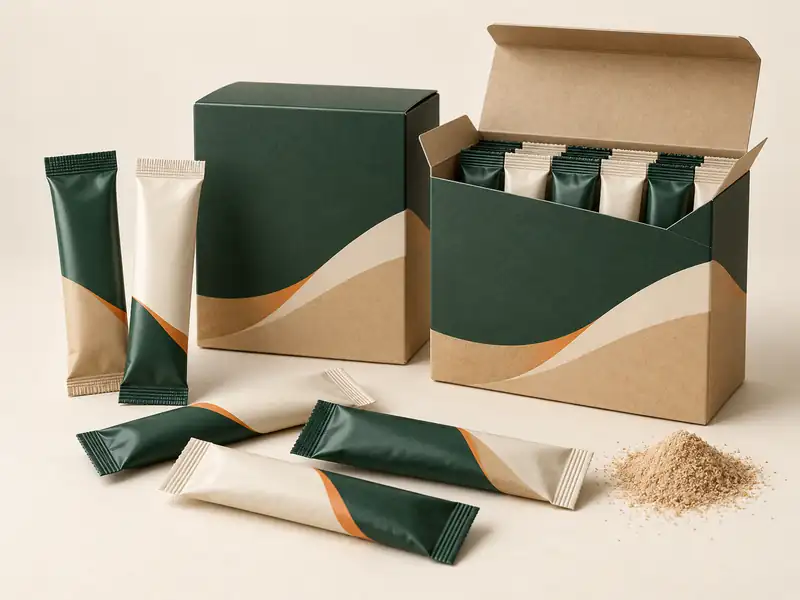
Coffee mix and 3-in-1 products may combine coffee with sugar, creamer, cocoa or flavourings. Formula, powder condition, target dose and retail format shape both primary packaging and cartoning.
PRODUCT → PACKAGING DECISIONS
What matters for coffee mixes?
- Formula and blend consistency
- Coffee, sugar and creamer differ in particle size and density. A uniform premix and controlled hopper movement limit segregation before dosing.
- Flow, dust and moisture
- Sugar and creamer make 3-in-1 mixes heavier, more moisture sensitive and less uniform than pure instant coffee. The line needs steady agitation, consistent dosing and controlled humidity.
- Target dose and seal
- A single-serve dose sets the sachet width and length. Enough headspace keeps the blend below the sealing jaws and produces a clean closure.
- Product information
- Multi-ingredient mixes require space for the ingredient statement, nutrition information and preparation directions. The artwork area, lot code and date position belong in the pack layout from the start.
EQUIPMENT ROUTE
Single-serve plus cartoning route
The formula, target dose, primary pack and carton count set the route. Filling, sealing, transfer and cartoning are coordinated as distinct process steps.
Sources & research basis
- Specialty Coffee Association review of coffee staling
- Whole-bean and ground-coffee gas-emission study
- Coffee storage and packaging study
- USDA coffee drink-mix specification
- FDA Food Labeling Guide
Product, bag and equipment suitability remain subject to sample review.