
MULTI-LANE SACHET & STICK PACK SYSTEMS

Multi-Lane Sachet
& Stick Pack Machines

Form, fill and seal multiple sachets or stick packs simultaneously from a single wide roll of packaging film. NEW PACKING configures each multi-lane machine around your pack format, product, dosing requirements and production target, with configurations available for up to 16 lanes.

  • UP TO 16 LANES
  • SINGLE-ROLL FILM FEEDING
  • SACHET & STICK PACK FORMATS
01

MACHINE OVERVIEW

WHEN MULTIPLE SMALL PACKS NEED TO RUN IN PARALLEL

What Is a Multi-Lane Packing Machine?

A multi-lane packing machine forms, fills and seals multiple sachets or stick packs during each production cycle. Instead of producing one pack at a time, it divides wide rollstock film into several synchronized lanes to meet higher output requirements for repeatable small-format packaging.
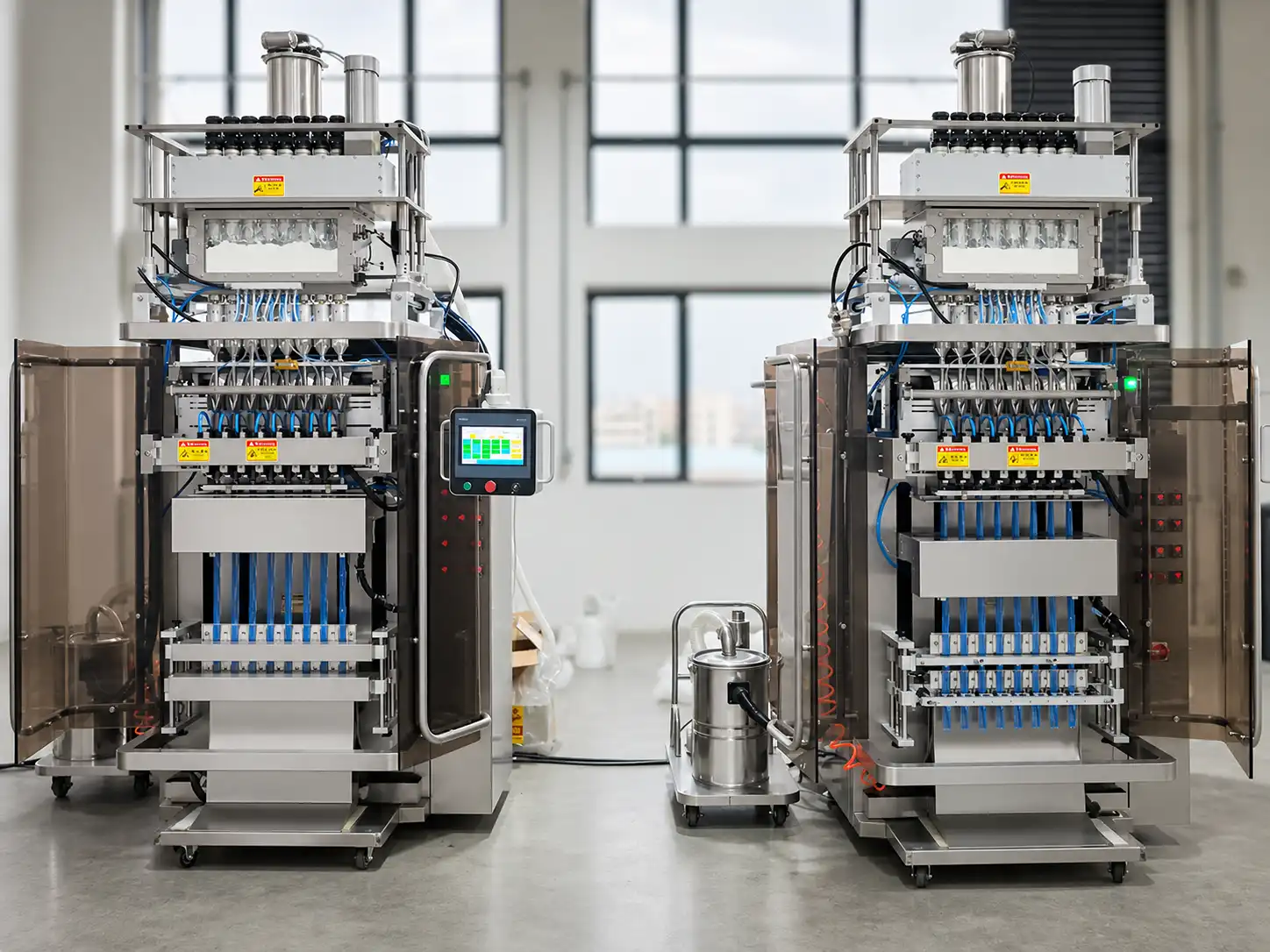
Multi-lane packing machine for sachet and stick pack production

MULTIPLE PACKS FROM ONE MACHINE PLATFORM

Built for Parallel Small-Format Packaging

Multi-lane packaging is suitable when a single-lane machine cannot reasonably meet the required total output. Film handling, lane quantity, pack format and filling arrangement are configured together around the product, finished package and production target.

This machine category includes dedicated multi-lane sachet machines and dedicated multi-lane stick pack machines. The two platforms use different forming structures, so machine selection begins with the required finished pack format.

PROJECT FIT & MACHINE ROUTE

Find the Right Multi-Lane Route for Your Project

First confirm whether parallel production fits your output requirement, then select the machine platform from the finished pack format.

  • OUTPUT

    Higher Total OutputYour required total output is higher than a single-lane machine can provide.

  • FORMAT

    Repeated Small PacksYou need to produce the same small sachet or stick pack in larger quantities.

  • WORKFLOW

    Coordinated ProductionYou prefer one coordinated multi-lane platform instead of operating several separate single-lane machines.

  • PROJECT

    Defined Project RequirementsYour pack format, dimensions, filling requirement and production target have been clearly defined.

CHOOSE BY FINISHED PACK FORMAT

Multi-Lane Sachet Machines

Choose this platform for three-side-seal sachets, four-side-seal sachets or shaped sachets. The required sachet format determines the forming, sealing and cutting configuration.

Multi-Lane Stick Pack Machines

Choose this platform for narrow tubular stick packs. Each film strip is guided around its corresponding forming tube before filling and sealing.

02

SUPPORTED PACK FORMATS

CONFIGURED AROUND THE FINISHED PACKAGE

Sachet and Stick Pack Formats for Multi-Lane Packaging

Multi-lane packing machines can be configured for sachets or stick packs made from rollstock film. The required pack format determines the machine platform, forming structure, sealing arrangement and cutting configuration.

Narrow stick pack for multi-lane packaging

NARROW TUBULAR PACK

Stick Pack

Each slit film strip is guided around its corresponding forming tube before filling and sealing.

Three-side-seal sachet for multi-lane packaging

FOLDED-WEB SACHET

Three-Side-Seal Sachet

A single film web is folded to create one closed side, while the remaining three sides are sealed.

Four-side-seal sachet for multi-lane packaging

TWO-WEB SACHET

Four-Side-Seal Sachet

Two film layers form the front and back of the sachet, with sealing around all four sides.
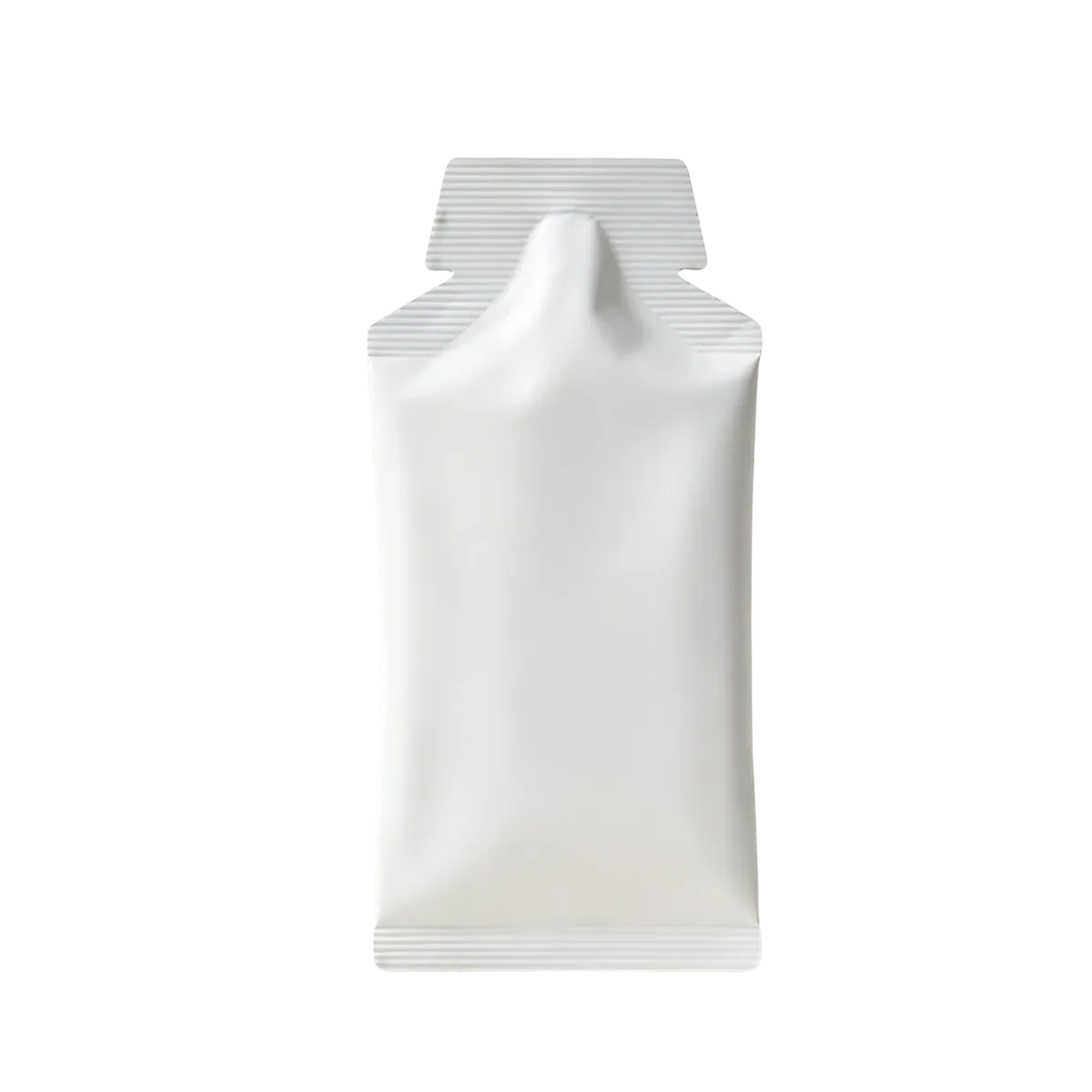
Shaped sachets produced by a multi-lane packing machine

DEFINED DIE-CUT PROFILE

Shaped Sachet

Die-cut tooling creates a confirmed sachet outline beyond a standard rectangular format.

CUTTING & OPENING OPTIONS

Select the Cutting Detail for the Finished Pack

These cutting details are reference examples. The final edge and opening design can be customized to the pack format and project requirements, subject to the confirmed machine configuration.
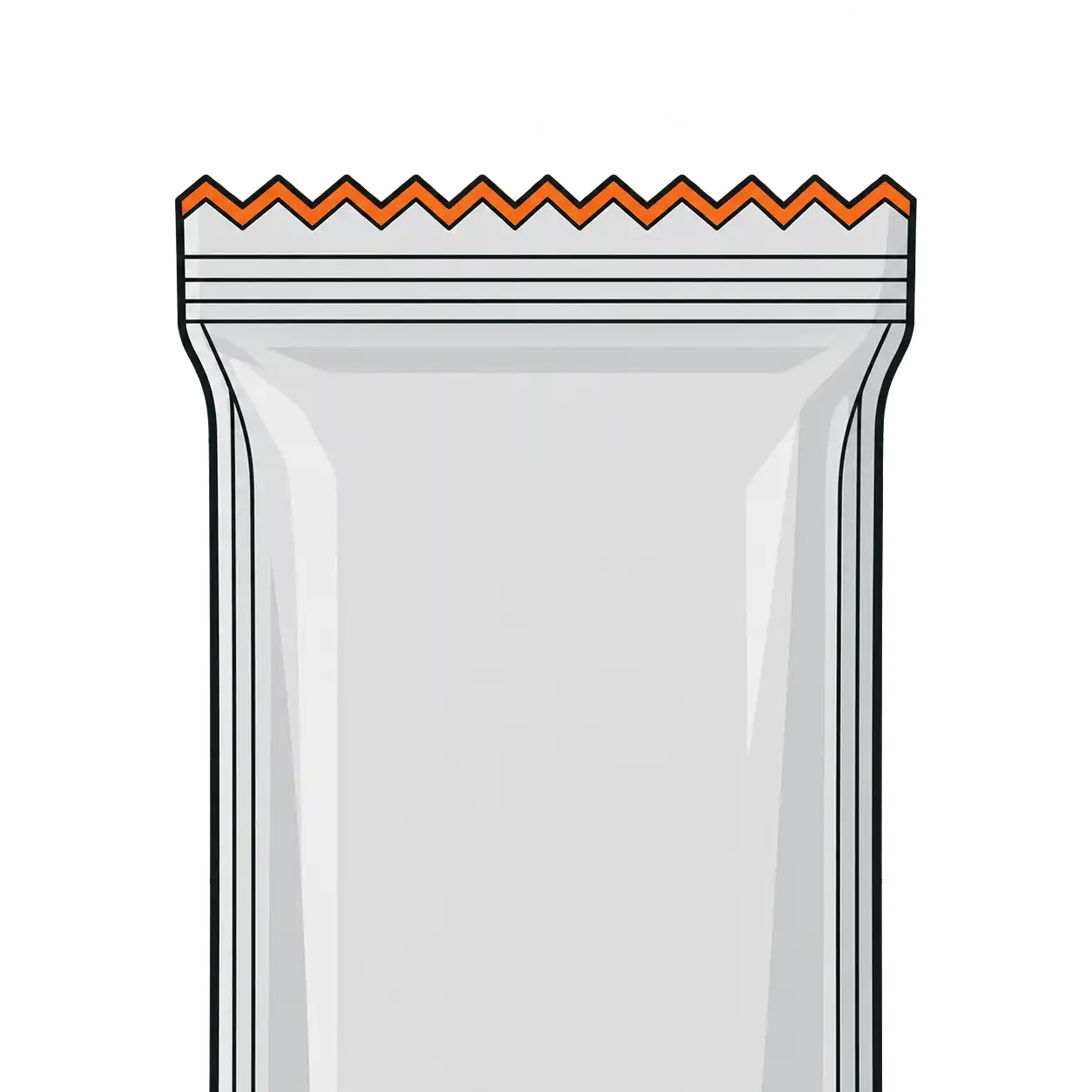
Zigzag cut packaging edge illustration

Zigzag Cut

A serrated cutting profile across the pack edge.
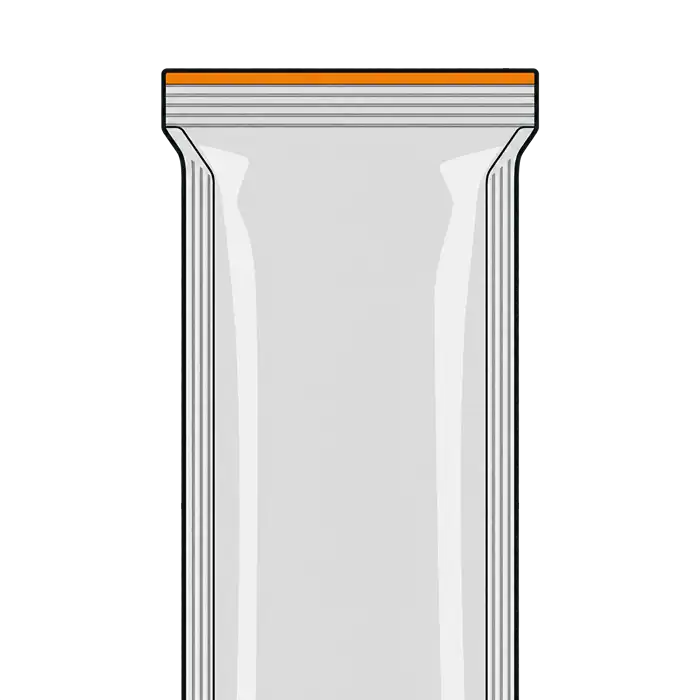
Straight cut packaging edge illustration

Straight Cut

A clean, level edge for a standard finished appearance.
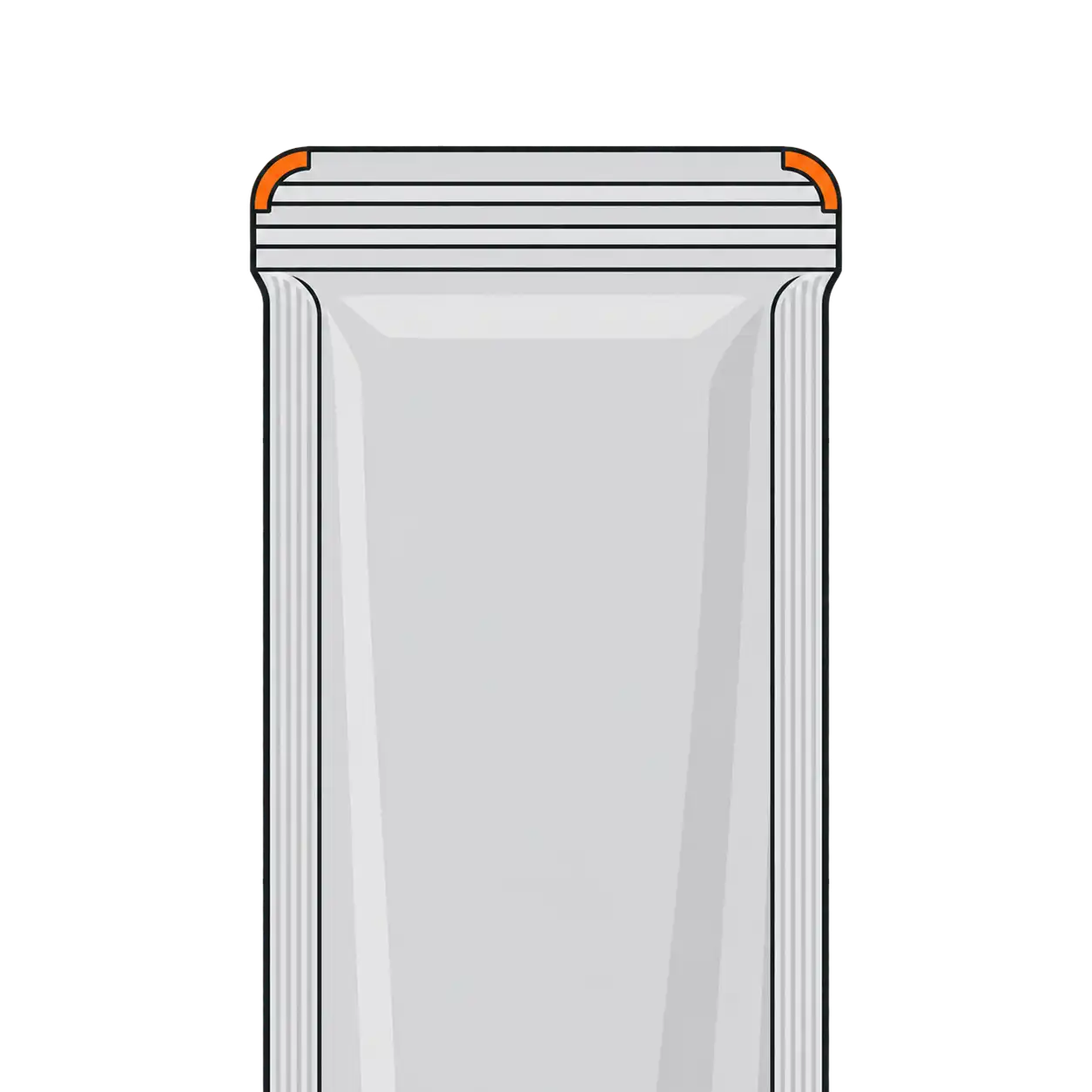
Rounded-corner cut packaging illustration

Rounded-Corner Cut

Rounded outer corners create a softer pack profile.
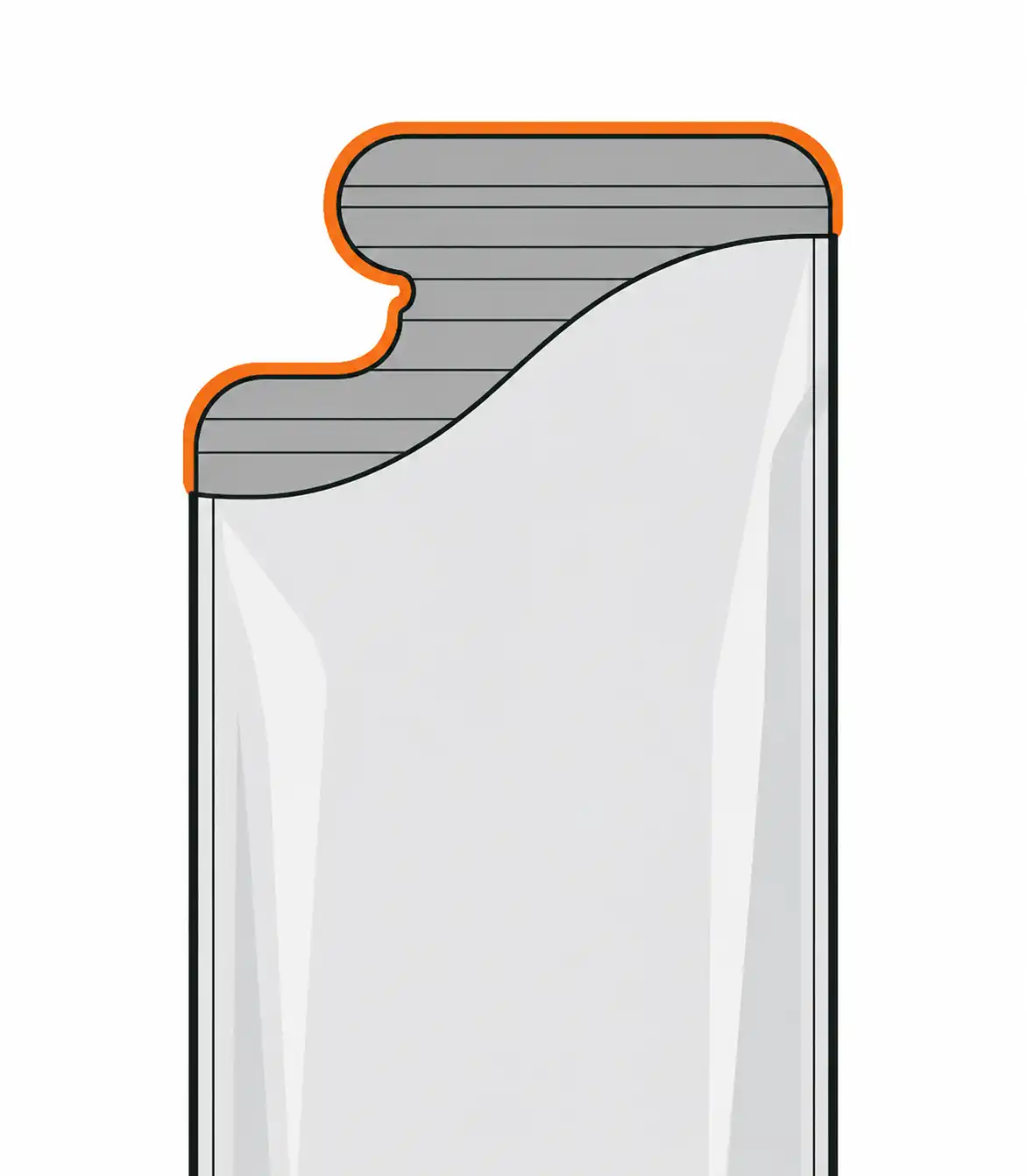
Die-cut shaped packaging edge illustration

Die-Cut Shape

A shaped cutting profile made for the confirmed pack geometry.
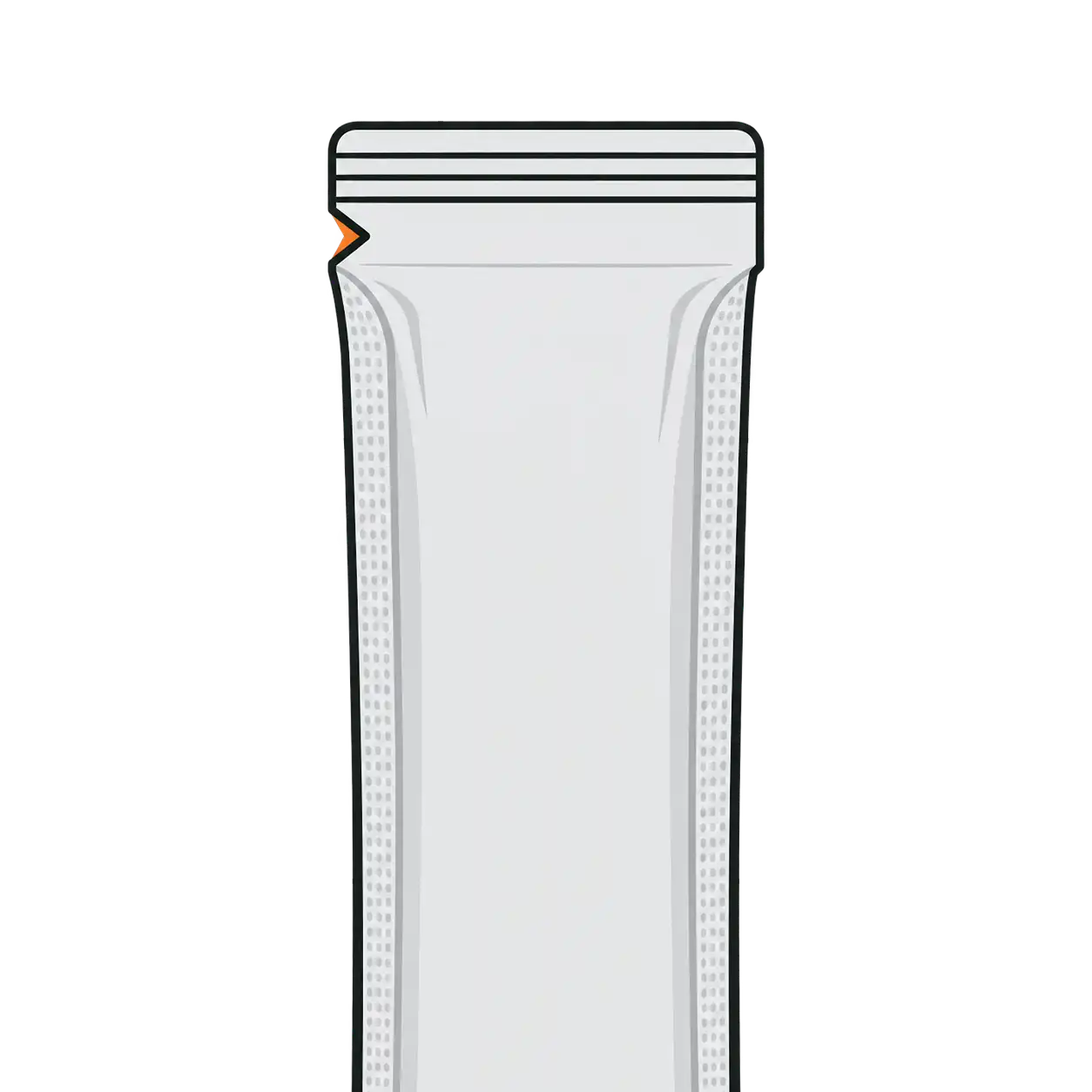
Tear notch packaging opening illustration

Tear Notch

A defined notch that provides an opening point.

03

APPLICATIONS

MATCH THE PRODUCT FORM TO THE PACKAGING CONFIGURATION

Multi-Lane Packing Machine Applications by Product Type

Choose a product category to view representative products, key project considerations and a relevant multi-lane packaging video.

Video example: probiotic powder packed by an 8-lane machine into round-corner back-seal stick packs.

Footage shows a representative packaging process only. Final configuration depends on the actual product, pack and required packaging result.

POWDERS & DRY MIXES

Powder Products in Multi-Lane Packs

Representative products
Probiotic powder, drink powder, soluble tea, cocoa powder and dry seasonings.
Pack directions
Stick packs or sachets, selected from the required finished format.
Review for the project
Powder flow, dust behavior, target fill and seal-area cleanliness.
04

FILLING SYSTEMS

MATCH THE DOSING METHOD TO THE PRODUCT

Product-Specific Filling Systems for Multi-Lane Packaging

The product does more than define the filler type. Its flow behavior, particle size, viscosity, temperature and target dose determine how product is supplied, measured and delivered across the configured lanes.
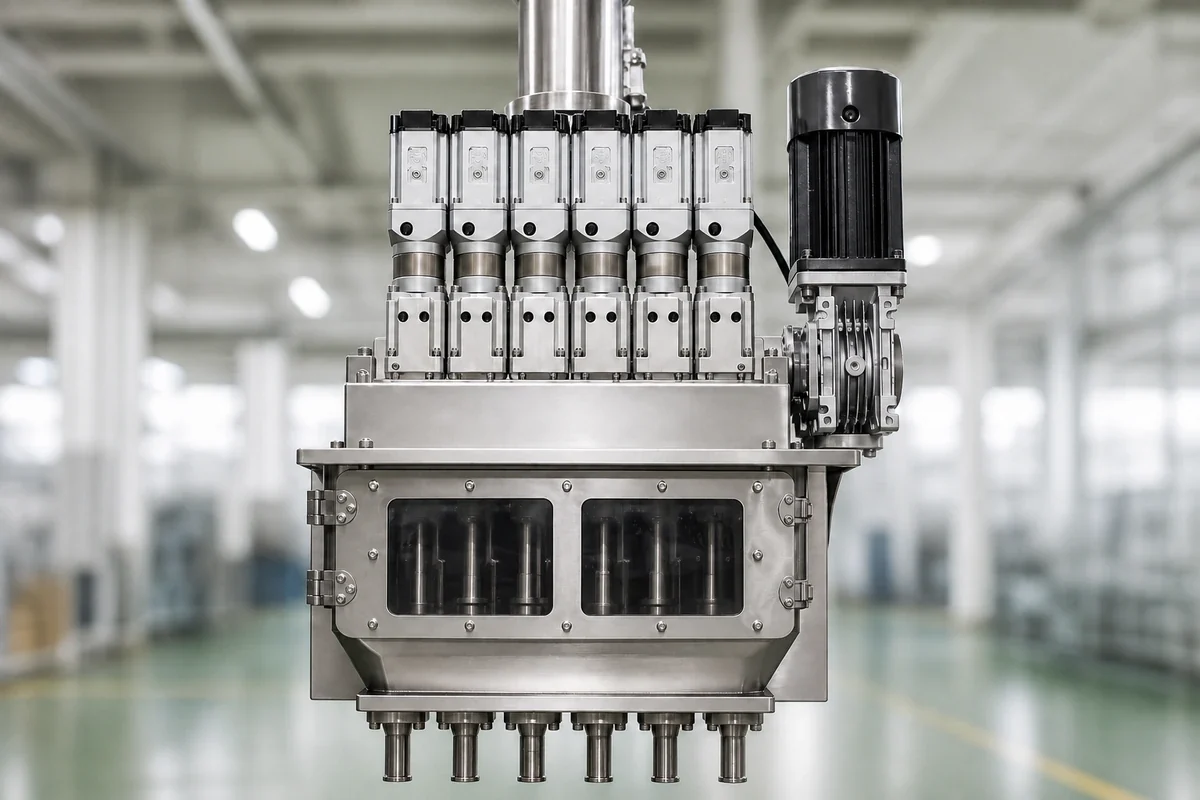
How does filling work on a multi-lane packing machine? Each lane has its own dosing mechanism and corresponding filling channel. The lanes operate in synchronization, while the selected dosing technology is configured around the actual product and required fill.
Multi-lane auger dosing system for powder packaging

FOR POWDER PRODUCTS

Auger Dosing System

Common direction
Metered screw dosing for fine, dusty, non-free-flowing, sticky or lumpy powders.
Product supply
Manual loading, screw feeding or vacuum conveying can be configured for the project.
Confirm for project
Powder flow, bulk density, dust behavior, target fill and seal-area cleanliness.
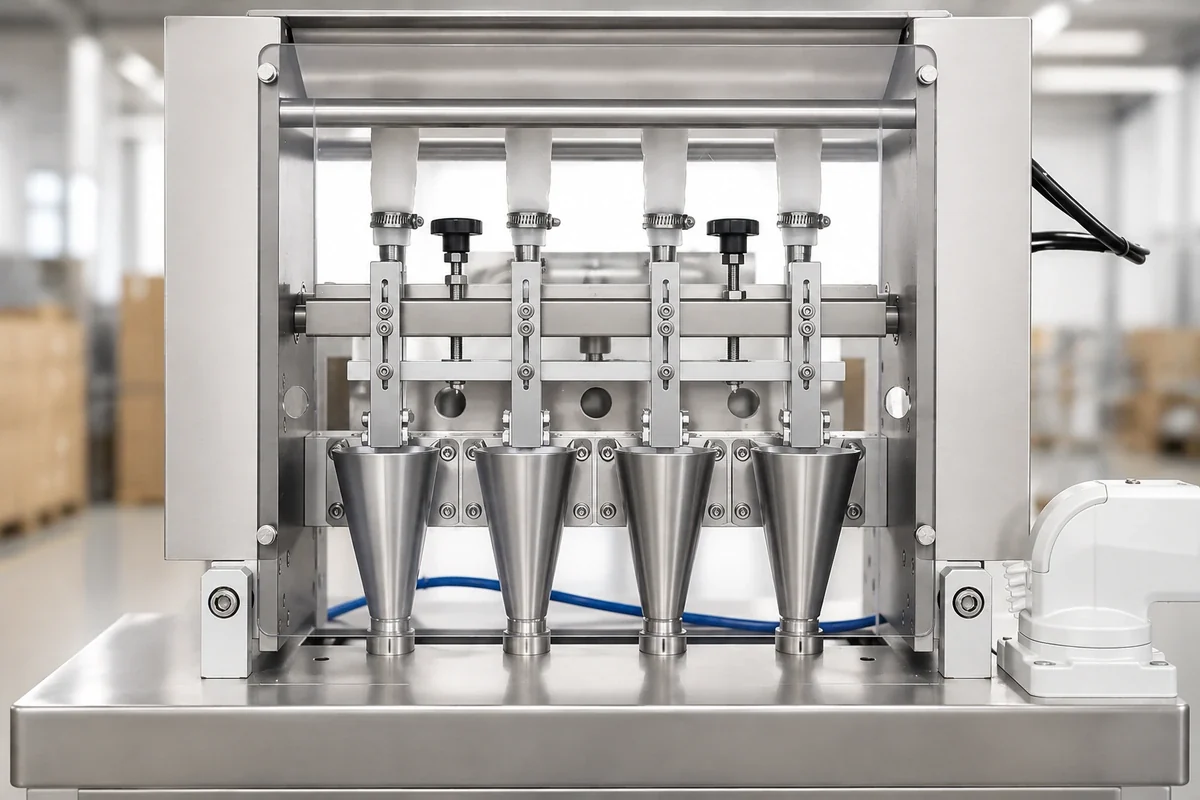
Multi-lane volumetric dosing system for free-flowing powders and granules

FOR GRANULAR PRODUCTS

Volumetric Dosing System

Common direction
Volume-based dosing for free-flowing powders and small granular products.
Product supply
Manual loading, screw feeding or vacuum conveying can feed the dosing section.
Confirm for project
Particle size, flowability, bulk density, target fill and product distribution across lanes.
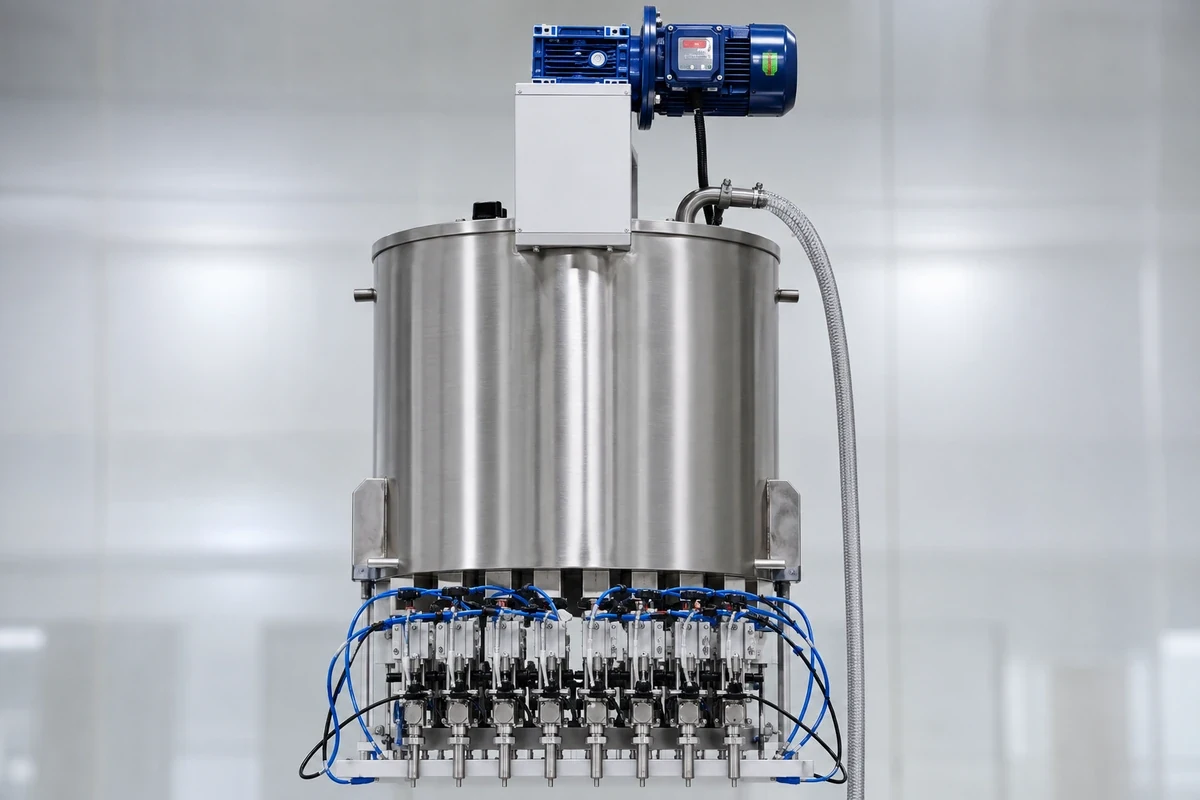
Multi-lane liquid filling system with product hoses and filling channels

FOR LIQUID PRODUCTS

Liquid Filling System

Common direction
Piston, gravimetric, flowmeter or servo liquid filling is selected according to product behavior.
Product supply
A holding tank and pump system can supply liquid or semi-liquid product to the filler.
Confirm for project
Viscosity, temperature, foaming, target fill, cut-off behavior and sealing condition.

PRODUCT HANDLING OPTIONS

Configure the Supply Conditions Around the Product

  • Powder & GranulesManual loading, screw feeding or enclosed vacuum conveying.
  • Flow SupportAgitation or anti-bridging can be added where product behavior requires it.
  • Dust ManagementDust-control measures can be configured for powder applications.
  • Liquid ConditioningAgitation, heating or insulation can be configured when required by the liquid.
05

PACKING PROCESS

FROM WIDE ROLLSTOCK FILM TO FINISHED SMALL PACKS

Multi-Lane Packing Process and Optional Functions

A multi-lane packing machine divides wide rollstock film into the configured lanes, forms multiple sachets or stick packs, fills each lane through its corresponding dosing channel, then seals, cuts and discharges the finished packs.
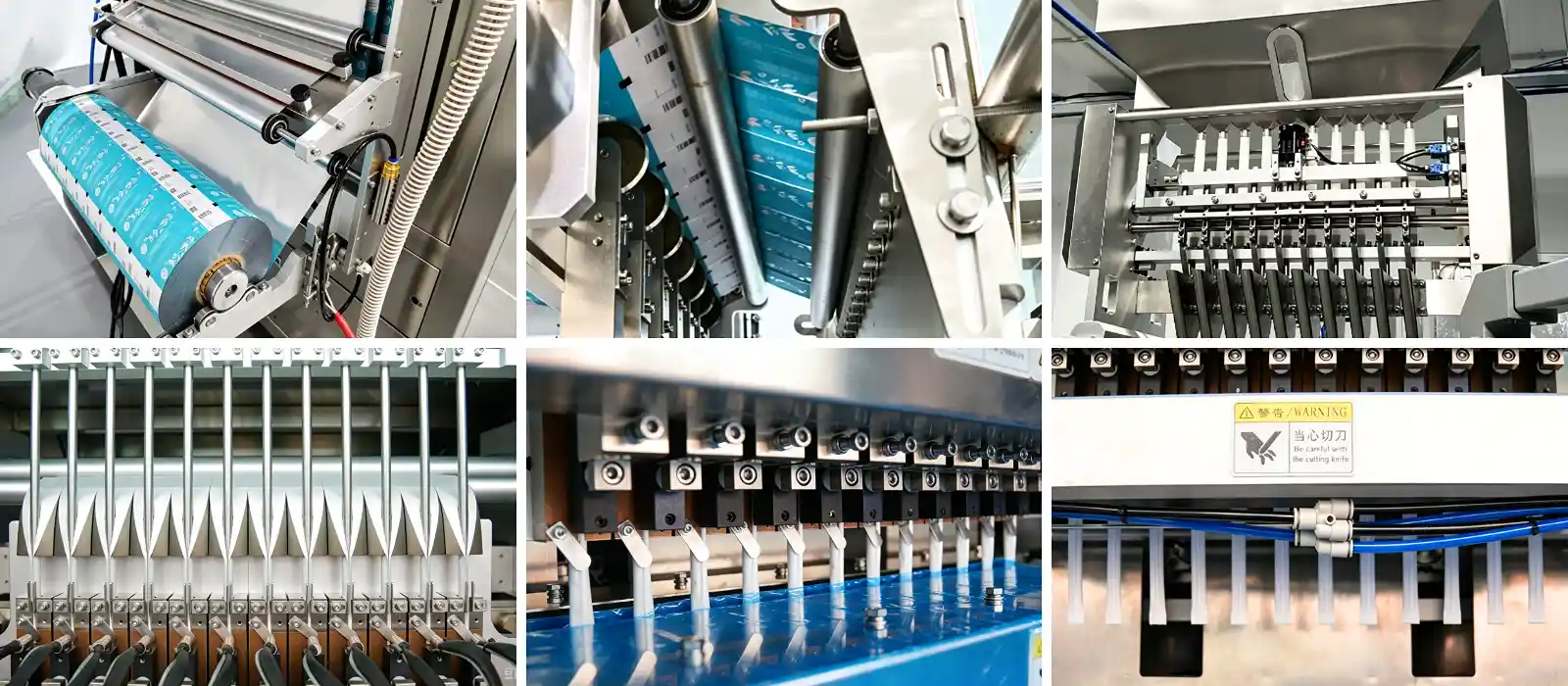
Multi-lane primary packaging process from product and rollstock film to finished sachets and stick packs

PRIMARY PACKING PROCESS

How a Multi-Lane Packing Machine Works

Film control, pack forming, dosing and sealing are configured as one synchronized system. The sachet and stick pack platforms use different forming structures.
  1. FILM SUPPLYFilm Unwinding

    Wide rollstock film is supplied to the machine.

  2. POSITION CONTROLWeb Guiding

    Automatic web guiding maintains film alignment. Printed film can use registration-mark tracking.

  3. LANE PREPARATIONSlitting & Distribution

    The film is slit and directed into the fixed number of configured lanes.

  4. PACK FORMATPack Forming

    Sachets use the confirmed folded-web or two-web structure; each stick-pack strip passes around its corresponding forming tube.

  5. PRODUCT DELIVERYDosing & Filling

    Each lane has its own dosing mechanism and corresponding filling channel, with all lanes operating in synchronization.

  6. PACK CLOSURESealing

    The sealing arrangement is configured for the confirmed sachet or stick-pack format.

  7. FINISHED PACKCutting & Discharge

    The packs are cut to the set length and discharged by the method selected for the project.

PROJECT-SPECIFIC FUNCTIONS

Configure the Functions Around the Finished Pack

These functions are selected according to the film, pack design, inspection requirement and downstream handling method. They are not assumed to be included in every machine.

Ribbon or Laser Coding

Apply the required production information using a coding method confirmed for the film and project.

Film Position Control

Automatic web guiding supports film alignment, while printed film can use registration-mark tracking.

Static Elimination

Static-control equipment can support more stable film and finished-pack handling where required.

Online Weight Inspection

Finished packs can pass through online checkweighing with rejection of products outside the confirmed limits.

Finished-Pack Cutting

Tear notches, straight or zigzag cuts, rounded corners, holes and shaped cutting are configured around the pack design.

Project-Specific Discharge

Chutes, direct discharge or conveyor transfer can be selected to suit the required collection or downstream connection.

REFERENCE INTEGRATION ROUTES

Connect Finished Packs to Downstream Automation

These are common reference routes, not fixed line layouts. The actual arrangement is planned around the required count, pack orientation and final sales pack.

OPTIONAL DOWNSTREAM HANDLING

Pack Finished Sachets or Stick Packs Into a Secondary Package

STEP 1Finished Small Packs

Sachets or stick packs leave the multi-lane machine.

STEP 2Sort & Count

A bag sorting and counting system prepares the required quantity.

STEP 3Choose the Secondary Pack
Into CartonsORInto Larger Premade Pouches
06

MODELS &
SPECIFICATIONS

MULTI-LANE MACHINE PLATFORM REFERENCE

Compare Multi-Lane Packing Machine Specifications

Select a finished pack format to compare the available machine platforms, lane quantity, bag dimensions and maximum film width. Metric and US customary units are shown together for fast global reference.

Back-Seal Stick Pack
SpecificationModel 400Model 680Model 980
Lanes2–43–104–16
Bag width mm / in20–650.79–2.5620–850.79–3.3520–1050.79–4.13
Bag length mm / in50–1501.97–5.9150–1501.97–5.9150–1501.97–5.91
Max. film width mm / in40015.7568026.7798038.58

Model 400

Lanes
2–4
Bag width
20–65 mm / 0.79–2.56 in
Bag length
50–150 mm / 1.97–5.91 in
Max. film width
400 mm / 15.75 in

Model 680

Lanes
3–10
Bag width
20–85 mm / 0.79–3.35 in
Bag length
50–150 mm / 1.97–5.91 in
Max. film width
680 mm / 26.77 in

Model 980

Lanes
4–16
Bag width
20–105 mm / 0.79–4.13 in
Bag length
50–150 mm / 1.97–5.91 in
Max. film width
980 mm / 38.58 in

* Reference speed is 20–40 cycles/min, equivalent to approximately 20–40 finished packs per minute from each active lane. Total machine output depends on the number of active lanes; actual output also varies with the product, bag dimensions, filling system and packaging material.

Specifications are reference values. The final model, lane quantity and bag-size range are confirmed according to the actual packaging project.

MODEL SELECTION GUIDE

How to Choose a Multi-Lane Packing Machine Model

Use these three checks to narrow the relevant machine platform.
  1. Finished pack formatConfirm back-seal stick pack, three-side seal or four-side seal.
  2. Bag width and lengthMatch the required finished dimensions with the applicable model range.
  3. Product and filling systemConfirm the product behaviour and corresponding dosing method.
07

TECHNICAL FAQ

BUYER QUESTIONS, ANSWERED

Multi-Lane Packing Machine FAQs

Practical answers about suitable products, model selection, lane quantity, packing speed, filling accuracy, rollstock film, line integration and after-sales support.

What Products Can a Multi-Lane Packing Machine Pack?

A multi-lane packing machine can be configured for powders, free-flowing granules, liquids and semi-liquids packed in small sachets or stick packs. The suitable filling system, pack format and machine configuration are selected according to product flow, target dose, bag dimensions and the required finished pack.

How Do I Choose the Right Multi-Lane Packing Machine Model?

Start with the finished pack format and required bag width and length. Then confirm the product, filling method, lane quantity and target output. The specification table provides reference ranges, while the final model is selected for the product and package that will actually run.

Compare Multi-Lane Machine Models
How Is the Required Number of Lanes Determined?

The required lane quantity is determined from the target output, finished bag width, available film width and the selected dosing system. Reference configurations range from 2 to 16 lanes, but the usable number of lanes must be confirmed for the actual product, bag size and machine platform.

What Packing Speed Can a Multi-Lane Machine Achieve?

The reference speed is 20–40 cycles per minute, equivalent to approximately 20–40 finished packs per minute from each active lane. Total machine output depends on the number of active lanes. Actual output also varies with the product characteristics, target dose, bag dimensions, filling system, packaging film and required sealing result.

How Is Filling Accuracy Managed Across Multiple Lanes?

Each active lane has its own corresponding dosing channel, while all lanes operate as one synchronized system. Filling accuracy depends on the selected dosing method, product consistency, flow behaviour and target dose. The expected tolerance must therefore be confirmed for the actual product and filling configuration.

What Rollstock Film Is Required for a Multi-Lane Stick Pack or Sachet Machine?

The machine uses rollstock film selected for the required forming and heat-sealing process. Film width is determined by the pack format, finished bag width, seal allowance and lane quantity. The film structure, thickness, sealing layer, roll dimensions and registration marks should be confirmed from the actual film specification.

Can the Machine Connect to Counting, Cartoning or Secondary Packaging Equipment?

Yes. Finished sachets or stick packs can be transferred to suitable sorting and counting equipment, a cartoning machine or a premade pouch machine for packing small packs into a larger pouch. Online checkweighing with rejection and project-specific discharge handling can also be included in the line plan.

Review Process and Line Integration
What Warranty and After-Sales Support Are Available?

The machine is covered by a 12-month warranty from the date it is received. A one-year spare-parts package is supplied according to the confirmed machine configuration. Remote technical support is available, and paid on-site installation and commissioning services can be arranged when required.

Discuss Your Multi-Lane Packaging Project
08

PROJECT ENQUIRY

REQUEST A CONFIGURATION REVIEW

Tell Us About Your Multi-Lane Packaging Project.

You do not need to have every specification confirmed. Send the information currently available, and we will review a suitable machine direction for your product and finished pack.

USEFUL INFORMATION TO SHARE

  • 01

    Product & Target FillProduct characteristics and required weight or volume per pack

  • 02

    Pack Format & SizeStick pack or sachet format, width and length

  • 03

    Target OutputExpected finished packs per minute or per hour

  • 04

    Available SamplesProduct photo, rollstock-film specification, drawing or finished-pack sample

Prefer to contact us directly?

Please tell us your product, required stick pack or sachet format, target fill, bag dimensions and expected output. Share whatever information is currently available.
Scroll to Top