
PACKAGING SOLUTIONS BY PRODUCT

Powder Packaging Solutions

Uneven fills, airborne dust and powder in the seal area can interrupt a packaging line. The solution starts with controlled feeding, measured dosing and a filling path suited to your product and finished pack.

Final equipment settings and results depend on the powder sample, target fill, packaging material, pack format and required output.
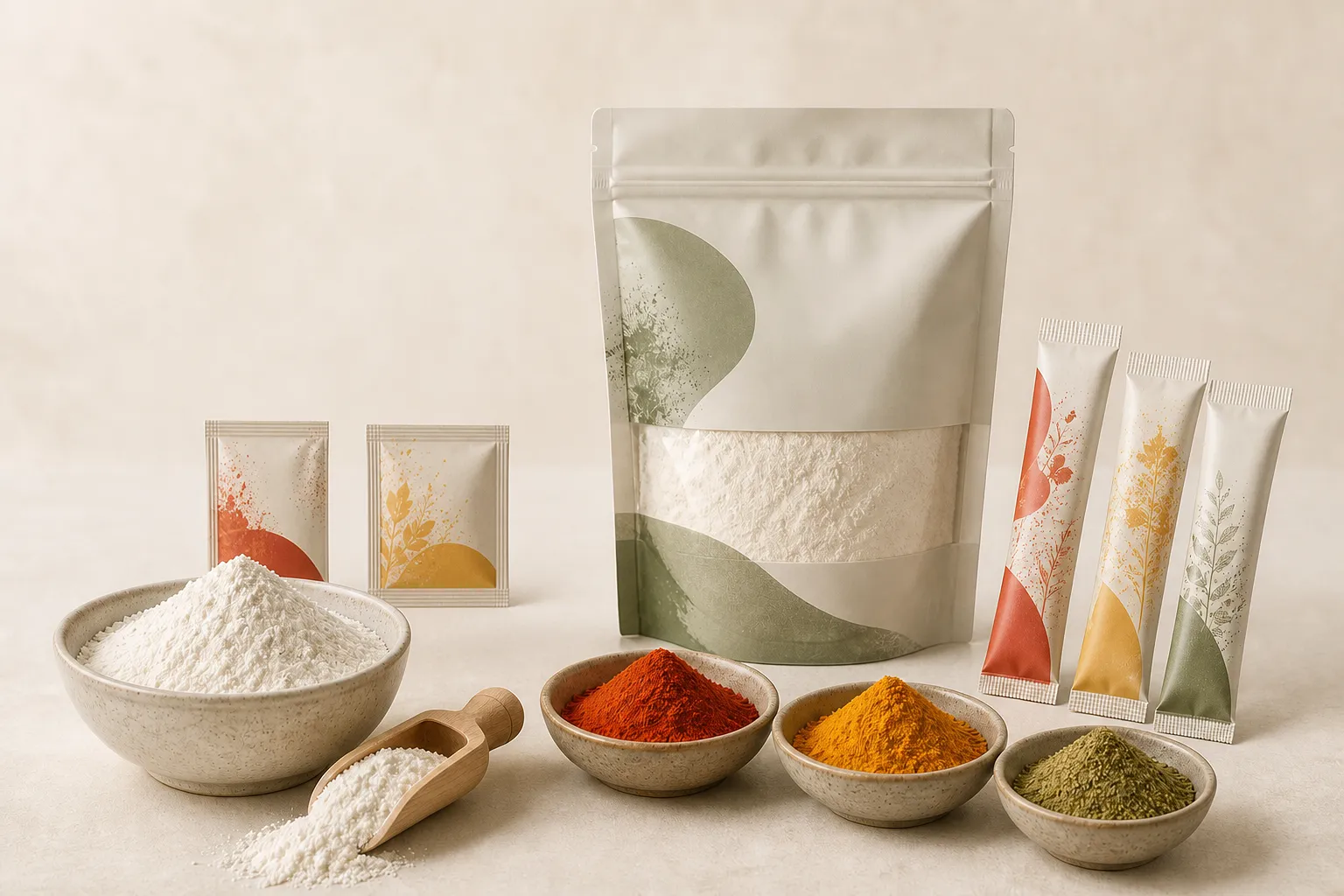
Illustrative flour and seasoning powders beside unbranded sachets, stick packs and a stand-up pouch
Illustrative packaging formats; final pack and equipment route depend on the product.

POWDER PACKAGING CHALLENGES

Why is powder difficult to package consistently?

Powder properties and production conditions shape fill-weight consistency, achievable line speed, seal quality and equipment configuration. Flour, seasoning powder, milk powder and protein powder can behave differently when those conditions change; mesh size alone cannot determine the setup.

CHECK THE POWDER
Flowability · Dust generation · Particle size / mesh · Moisture uptake · Static cling
CHECK THE SITE
Room temperature · Relative humidity · Contact surfaces
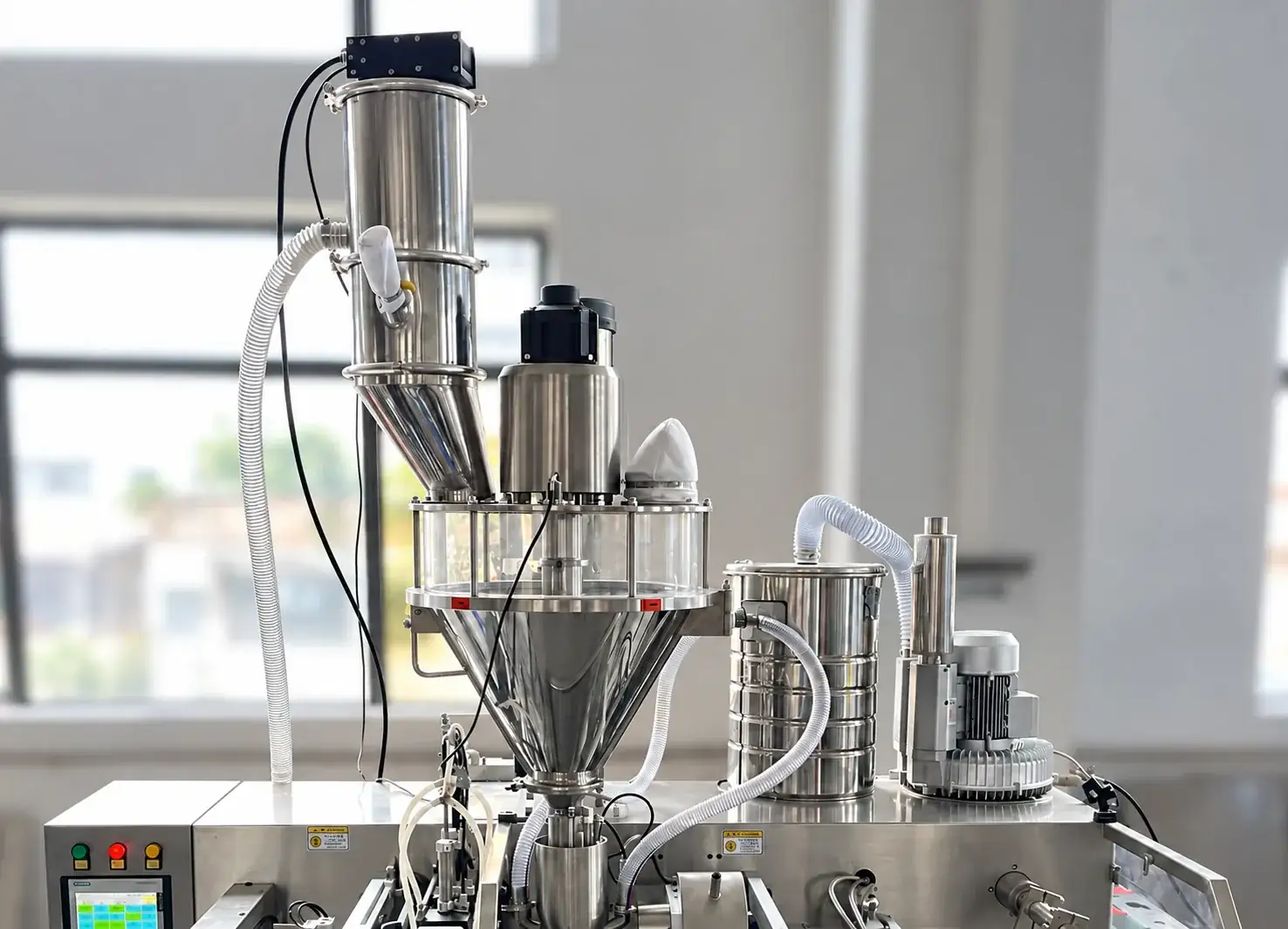
Powder vacuum feeder with auger dosing unit and dust collection equipment
Vacuum feeding, auger dosing and dust collection equipment for a powder packaging line.
01 / FEEDING

Powder stops or surges at the hopper

Check the feed path before increasing line speed. A flour or starch powder that clumps or bridges can interrupt supply to the dosing unit; hopper and feeding arrangements are selected from the actual powder's behavior.

What to checkFlow behavior, particle size or mesh information, product moisture and moisture uptake, room temperature and humidity.

02 / DOSING

Pack weights vary from bag to bag

For a protein powder or powdered drink mix, set the dosing route around the target net weight and allowed variation. Product flow, fill amount and line speed affect repeatability; weight checks or feedback are specified when the project requires them. Explore auger fillers for powder dosing

What to checkTarget fill, accepted weight range, bulk density, powder sample and required output.

03 / SEALING

Powder reaches the sealing area

Keep the filling path and seal zone in the same design decision. Fine seasoning powder or milk powder that becomes airborne can reach the pouch mouth and affect the final seal, so filling position, bag opening and sealing sequence need to be assessed together.

What to checkDust generation, static cling during transfer, pouch or film sample, filling opening and seal layout.

The next step is to match these challenges to your powder type and preferred finished pack.

CHOOSE THE FINISHED PACK

Which powder packaging format fits your project?

Choose the finished pack first. A powder can use more than one format; pack size, product behavior and production output determine the machine route.

8-lane probiotic powder packaging in back-seal sachets.

MULTI-LANE POWDER SACHETS

Small powder packs made across parallel lanes

The video shows an eight-lane back-seal sachet line. Sachets and narrow stick packs are separate format choices; the required seal structure, dose and lane count define the equipment setup.

Common powder examplesInstant coffee powder, coffee mixes, milk powder, cocoa powder, powdered drink mixes, seasoning powder and probiotic powder.

Choose the pack
Set stick width or sachet seal layout from the dose, film and retail presentation. Define carton count only when a multipack is needed.
Control the powder
Flow, dust and target fill shape the feeding and dosing arrangement; the seal area must stay clear across the selected lanes.

The product examples show possible packaging directions, not a fixed machine specification. Final configuration and operating results depend on the powder sample, target fill, pack sample and required output.

POWDER PACKAGING FAQ

Questions before choosing a powder packaging machine

Quick answers to the machine, dosing and pack decisions that follow your powder handling assessment.

Which machine should I use for powder packaging?

Choose the finished pack first: a multi-lane machine for small sachets or stick packs, VFFS for bags formed from rollstock, and a premade-pouch machine for ready-made pouches. Powder behavior, target fill and required output then determine the feeding and dosing setup.

Compare powder pack formats
Is an auger filler suitable for flour, milk powder or coffee powder?

An auger filler is a common dosing route for these powders. Its screw, hopper and feeding arrangement are selected for the actual powder, target dose and acceptable weight variation; a product trial establishes the achievable result.

Explore auger powder dosing
Can one machine pack different powder products?

Yes, if the products use a compatible pack format and the line has suitable feeding, dosing and cleaning arrangements. Test each powder before setting change parts, operating speed or fill-weight targets.

When do I need vacuum feeding and dust collection?

Vacuum feeding provides enclosed transfer to the filler; dust collection addresses airborne powder at transfer or filling points. Choose each from the supply method, powder dust level and site layout rather than treating either as a standard requirement.

How do I choose the right pouch size for powder?

Size the pouch around the target net weight and the powder's bulk volume, then leave enough room for filling and a clear seal area. Check the finished pack with the actual powder and pouch sample.

Which pack works for moisture-sensitive powder?

Use a pack with a barrier and reliable seal suited to the powder and intended storage conditions. A sachet, VFFS bag or premade pouch can be specified this way; bag shape alone does not establish shelf life. Test the chosen material and seal with the product.

Can a sachet machine accurately fill very small powder doses?

Small powder doses are possible, but the acceptable weight range must be defined before choosing the filler. For instant coffee, seasoning or protein powder sachets, test the actual dose and powder at the intended lane count and speed; the machine label alone does not establish fill accuracy.

START A POWDER PACKAGING PROJECT

Tell us about your powder and finished pack.

Send the details you already have. Your powder sample and preferred pack help define the feeding, dosing and sealing route; the required output sets the line configuration.

Send Your Powder Packaging Requirements

A product photo or pack sample is a useful starting point.

Your powderProduct type, sample, flow and dust behavior.
Target fillNet weight and acceptable weight variation.
Finished packSachet, stick pack, VFFS bag or premade pouch; sample or dimensions.
Required outputTarget packs per minute or hour and production conditions.
Scroll to Top